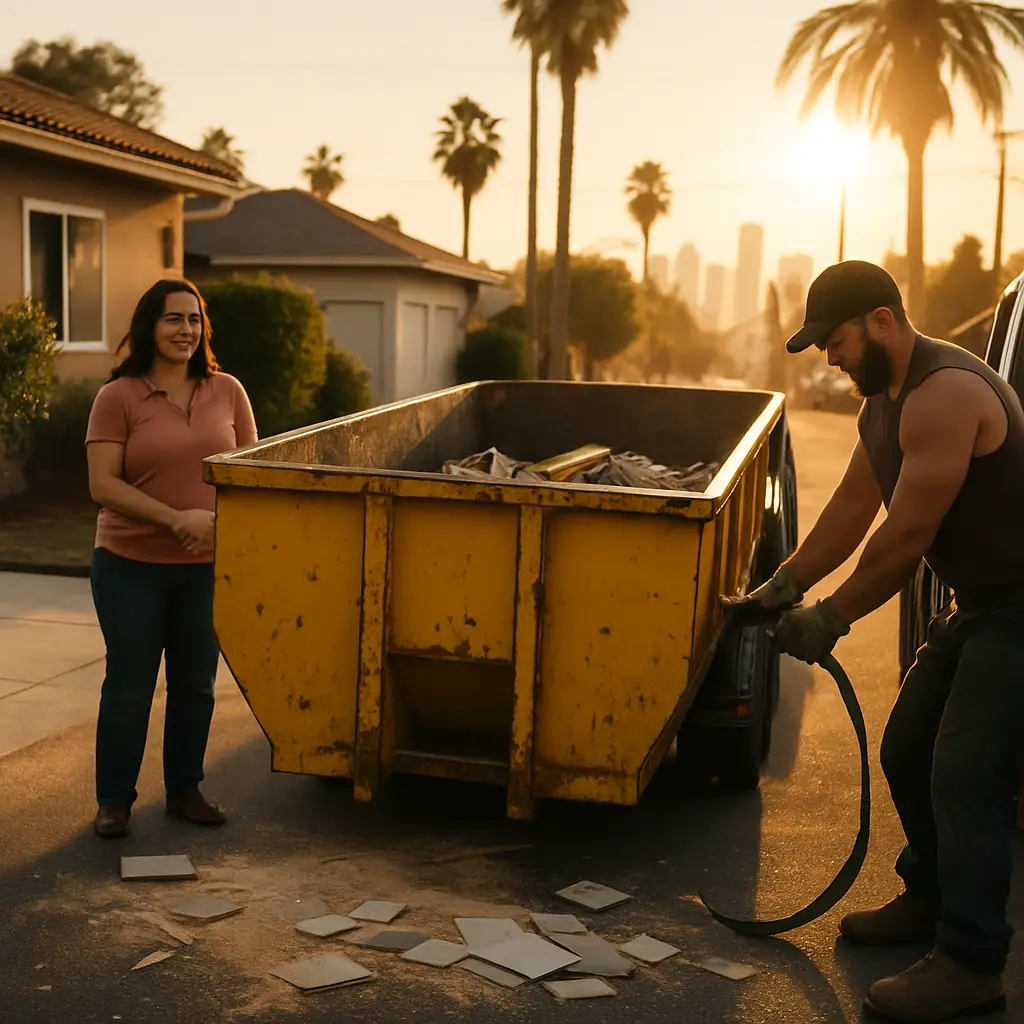
It started with a knock at dawn and the thud of a metal lid closing. Marta opened her front door to find a yellow roll-off dumpster twice the height of her mailbox sitting in her driveway like an impatient guest. ‘We only ordered a dumpster, not an occupation,’ her neighbor called from the sidewalk, eyebrows up against the first heat of the day. The city smelled of coffee and asphalt; a distant siren skimmed the horizon. For Marta, a week into a kitchen demo and a lifetime of delaying decisions, the dumpster felt like the first honest step toward a house that might finally breathe again.
Setup: People, Place, and the Problem
Los Angeles can make any chore feel cinematic. Narrow streets, steep alleys, and the constant hum of life turn a simple dumpster drop into a choreography. Marta had hired Eli, a contractor with a careful eye and a weathered truck. He called the rental company—Rob, the driver, who smelled faintly of diesel and peppermint gum—two days earlier. They discussed size, timing, and the Permit Puzzle: whether the dumpster would sit in the driveway or the street, whether the neighborhood HOA would grumble, and whether the city would need a permit if the container blocked parking.
‘If it sits on the curb, the city will want a permit,’ Rob said, flipping open his clipboard, paper fluttering like a dove. ‘If you can keep it on private property, that’s the easiest. But those alleys are tight—I’ve seen dumpsters knock down sagging eaves.’ The sun baked the asphalt until it shimmered, and the dumpster’s painted letters reflected like a promise.
Rising Action: Constraints, Choices, and Small Disasters
That morning, a driver had blocked half the block while maneuvering around a broken city tree and two morning coffee runs. A bicyclist swerved, sending a shower of loose screws skittering across Marta’s driveway, which made Eli curse softly. The dumpster delivery turned into a careful puzzle: measuring distances, spotting low-hanging wires, thinking ahead to pickups three days later when the garage would be too full for a car.
‘We have to watch the weight,’ Eli warned as he tossed a pile of tile into the metal mouth. ‘Los Angeles charges overage by the ton, and with all those tiles you could blow your budget.’ Marta learned the language of disposal fast—cubic yards, tonnage, roll-offs and permits—and felt her anxiety mix with a new practical excitement. Each tile that landed made the dumpster sound like a drum, a cadence of progress.
The tension peeked when a neighbor complained to the HOA about sightlines and street space. Marta sat on her stoop and listened to the conversations—the soft bargaining of people who live so close they share trash pickup days. ‘Just sign here for the pickup window,’ Rob said, ‘and mark any hazardous stuff. No paint cans, batteries, or old gas.’ The list of forbidden items read like a secret code for domestic apocalypse: electronics, chemicals, and anything that might make the city shut them down.
Key Insights Woven Into the Story
Between the clatter of demolition and the hum of LA mornings, Marta gathered rules that would help anyone in the Greater Los Angeles Area tackle dumpster removal. She learned to estimate by cubic yards: a 10-yard fits small cleanouts, a 20-yard suits kitchen remodels, and a 30-yard handles whole-house projects. She discovered that street placement usually requires a permit from the local DOT, and that driveway placement avoids that but needs space and careful maneuvering.
Rob taught her about weight fees and prohibited items. ‘Heavy stuff like concrete and dirt will cost extra,’ he said, loading another slab. ‘And hazardous materials need special disposal—call a household hazardous waste center. LA has drop-off events and a recycling program; you can donate usable furniture to local nonprofits instead of throwing it away.’ Marta noted the city’s push toward zero waste by 2050, which underlined one rule: separate what can be reused, recycled, or donated.
Practical tips rose out of the chaos. Schedule pickups to avoid rush hour, place heavier items at the bottom, and keep a clear path for the driver. Take photos before and after to document property condition and any curb permits. Ask the rental company about same-day pickup options when surprises occur; some companies in LA offer flexible windows for emergency removals.
Resolution: The Last Load and a Quiet Drive Away
On the fourth day the crew stacked the last of the demolition into the dumpster. A final sweep of the driveway kicked up sawdust that glittered like ash in the late afternoon sun. Marta watched as Rob clipped straps and the winch whined to life. The truck lifted the container with a mechanical sigh and eased back into the street, narrower now without the hulking yellow box. The driver nodded to Marta. ‘Looks better already,’ he said simply. For a moment, the block felt owned by light instead of junk.
Neighbors waved, someone barbecued two doors down, and the smell of grilled onions threaded through the air. Marta felt lighter; not every loose end had been resolved, but the physical weight that had pressed at her chest for months had been hauled off and would be processed, recycled, or otherwise given new life. The city swallowed the debris into its complex systems: transfer stations, recycling centers, donation bins, each with its own rhythm.
Takeaway: What to Remember and Do
If you plan dumpster removal in Greater Los Angeles, remember to measure your job, check permit needs, and separate hazardous items. Talk to local rental companies about weight limits and overage fees, schedule pickups with buffer time, and seek donation or recycling alternatives before tossing usable goods. Plan for narrow streets and alleys, watch for HOA rules, and take before-and-after photos. Most importantly, treat the process as a choreographed task: a mix of logistics, local regulations, and small acts of civic courtesy.
As the sun dipped behind the skyline and the last taillights winked out, Marta closed her front gate and inhaled deeply. The house no longer felt crowded by yesterday’s decisions. The smell of cut wood lingered, a promise that something unfinished could become beautiful. In Los Angeles, where movement is constant, the simple act of making space felt like a revolution performed one dumpster at a time.