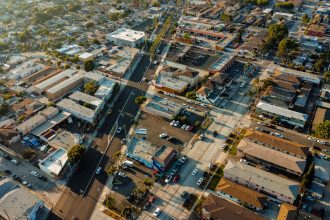
The first breath of morning smelled like diesel, coffee, and the sharp, resinous tang of fresh-cut plywood. Maya stood on her porch in Highland Park, cupping a paper cup with trembling fingers, watching a steel rectangle the size of a living room crawl down her street with all the dignity of a migrating whale. She had imagined renovation as soft hammers and triumphant paint swatches. She had not imagined a thunderous roll-off dumpster that swallowed old cabinets and half the yard’s history.
A Morning That Smelled Like Diesel and Coffee
Sunlight hit the Hollywood Hills and skimmed the rooflines of houses in Silver Lake and Echo Park as Omar, the driver, eased the truck to a stop. He killed the engine, and the neighborhood seemed to lean in. Children on bikes drifted like flotsam. Mrs. Mendoza two doors down opened her window and called, “Is that for you, dear?”
“One of those,” Maya said, laughing nervously. “We’re finally gutting the kitchen.”
The dumpster’s edges gleamed. It was 20 yards—big enough to eat a refrigerator and several years of accumulated pizza boxes. Omar popped the hydraulic release with a practiced flick. Students from nearby schools would later point to this moment as the day their block acquired a new landmark.
Who Calls for a Dumpster?
It turns out everyone. From contractors in Pasadena tearing out kitchens to artists in Venice clearing studio clutter, from homeowners in Burbank replacing fences to landscapers in Long Beach hauling away palm-tree trunks after a storm—dumpsters show up where transformation is underway. That day, Maya and her contractor, Luis, became the kind of people who learned the neighborhood’s rhythms: morning delivery windows, when to close the driveway to avoid blocking trash collection, and how to placate an HOA rep in West Hollywood who thought three inches of tarp was a civic offense.
The Dumpster Decides to Teach
Two hours into the first load, Maya discovered a truth she hadn’t budgeted for: there are ghosts in every home renovation—old paint cans, a stack of fluorescent tubes, a battered mattress, a box of electronics with sticky keys and frayed cords. “We can’t just throw everything in there,” Luis said, eyes narrowing. “Some of this has to be special handled.”
That sentence pulled the experiment into focus. Where Maya thought the dumpster was a simple receptacle, it was actually a hub of rules and logistics. Omar, wiping his hands on a rag, chimed in. “If you overload it, I can’t take it. If you put batteries or solvents in, I can’t take it. If the city sees it blocking the lane without a permit, I won’t be able to place it here for long.”
The words sounded bureaucratic at first, but they were really about safety and community wellbeing. Mrs. Mendoza’s grandson could get hurt on sharp metal; rain could carry paint chips into storm drains that feed Marina del Rey and the beaches; illegal dumping could attract fines and ruin the street’s image. Suddenly the dumpster had become a public actor in Maya’s private story.
Learning the Rules of the Road
Omar taught Maya the practicalities that distinguish experienced haulers from weekend novices. “There are sizes—10, 20, 30, 40 cubic yards,” he explained, demonstrating with his hands. “Ten’s for a bathroom or small attic cleanout. Twenty’s a kitchen or medium remodel. A 30 or 40 might be for demolition or major construction. Pick the wrong size and you either waste money or get into trouble trying to cram everything in.”
He told stories of Downtown LA jobs where contractors had to reroute traffic because they hadn’t secured a permit from LADOT. He named other cities by way of caution: Santa Monica’s public works would not mess around with permit limits close to the beach; Long Beach had strict rules for weight on older residential streets; Pasadena sometimes required a public works inspector for large placements near historic homes. Each jurisdiction, Omar said, had its own heartbeat. Knowing the rhythm kept projects from missing a beat.
Smoke, Sound, and the Scent of Tension
Midday heat made the dumpster radiate warmth. When Maya lifted a tarp to shove in an armful of shredded drywall, a small cloud of dust puffed out and coated her forearms like powdered sugar. She sneezed, and the sneeze felt like an admission: progress costs something. Nearby, a pickup idled while its owners debated whether to donate a gently used couch to a Glendale thrift store or drop it in the bin. “Donations cut waste and sometimes your tip fees,” Luis offered. “Habitat ReStore, Goodwill—people forget those options.”
Tension mounted when her neighbor, Gary from Silver Lake, came over with an expression that’s part curiosity, part dread. “You’re blocking my driveway,” he said. “Are you sure this is legal?”
A conversation followed—about Monday morning trash schedules, about how long a dumpster could sit on a city street, about neighborly courtesy. Later that week, Maya would go to the municipal website to pull permit forms. In Venice she learned the beach neighborhoods often require set-back distances for truck maneuvering; in Inglewood the crews discussed limited hours because of busy airport approach corridors. The lesson was clear: you don’t just rent a dumpster; you coordinate a small civic event.
Key Insights in Motion
Between the soundtrack of clanging metal and the city’s hum, practical truths emerged, stitched into the narrative like nails into joists.p>
First: Pricing has layers. A rental quote isn’t just the box’s cost—the company factors in delivery and pickup time, distance to the nearest transfer station, weight and type of debris (green waste and recyclables are cheaper to dispose of than mixed construction debris), and potential permit fees. Ask for transparent breakdowns and whether the price includes a set tonnage or charges by weight overage.p>
Second: Not everything goes. Paints, solvents, asbestos, certain appliances, fluorescent tubes, and electronics often require special handling or certified disposal. Crews will refuse or fine you for mixing hazardous waste with regular debris. Antonio, a hauler from Burbank, told Maya, “If you have old lead-based paint or suspect asbestos in tiles, stop. Call an abatement pro. We’ll work with them, but we can’t take regulated materials.”
Third: Recycling and donations matter. Many items in a household purge have second lives—appliances can be refurbished, wood can be milled or burned cleanly by licensed facilities, metals fetch recycling credits that lower disposal costs. CalRecycle and local transfer stations like Sunshine Canyon (which serves many parts of Los Angeles County) provide resources and drop-off options.
Fourth: Logistics are social. Communicate with neighbors, notify your HOA, secure an on-street permit if required, and choose delivery times that won’t interfere with school pickups or rush hours. Omar suggested early-morning placements to avoid heat and to get a head start before traffic clogs streets near Downtown LA and the 101 corridor.p>
The Moment of Truth
On the third day the crew arrived to pull the dumpster away, the family gathered like witnesses to a minor miracle. The lid scraped shut with a metallic sigh. Maya felt a tug—part grief for the old cabinets, part relief at the cleared space where a new kitchen awaited. She handed Omar the keys to the gate as a symbolic thank-you.
“You did good,” he said. “You sorted, you kept hazardous stuff out, you told the neighbors. That makes my life easier and the city’s, too.”
The truck’s backup alarm beeped a steady, polite rhythm. The hydraulics rose, the dumpster slid forward, then pivoted on the asphalt. Cars slowed; a cyclist clipped his bell in salute. As the container lifted, one of Maya’s children shouted, “Bye-bye, old kitchen!” The neighborhood laughed. The sound hung over the block like a ribbon.
How It Ended
By dusk, the truck rolled west, hugging a route that would take it past Boyle Heights, under the watchful gaze of the Griffith Park observatory, and down through Burbank toward the sorting yards. The sunset turned the dumpster’s enamel a molten orange. Maya closed her front gate and inhaled a breath that tasted faintly like pine sawdust and new paint fumes. Their home looked different—brighter at the edges, a little vulnerable, but full of promise.
What to Carry Forward
If you live anywhere in the Greater Los Angeles Area—Pasadena, Glendale, Santa Monica, Long Beach, Inglewood, or the sprawl between Downtown and the coast—renting a dumpster can feel like orchestrating a small production. Remember these touchstones:
– Choose the correct size for the job to avoid extra trips or unnecessary expense.
– Ask about weight limits, included tonnage, and how overage charges are calculated.
– Separate hazardous materials, and schedule certified disposal for items like asbestos or certain electronics.
– Explore donation and recycling options before trashing things; many non-profits will pick up larger usable items.
– Check with your city for on-street permits and time-of-day restrictions; LADOT handles many LA placements, but individual cities have specific rules.
– Secure the load with tarps and tie-downs to comply with safety rules and prevent littering and fines.
– Hire a licensed, insured company with transparent pricing and local experience; local knowledge avoids embarrassing missteps.
Maya pinned a small note to the fridge that said, “Remember: call Goodwill before you bin.” The household had learned to treat waste as a sorted conversation rather than an afterthought. There was pride in that, and a new kind of confidence in calling contractors and haulers who could speak in straightforward terms about permits, transfer stations, and recycling credits.
Outside, the city moved on. A jogger from Silver Lake looped past, headphones in, oblivious to the day’s drama. A gull wheeled near the coast, scouting leftovers. The truck’s taillights grew smaller against the evening glow above the 110, then disappeared. Maya stood on her porch and watched the sky bruise into deep indigo, the distant lights of Hollywood and downtown blinking like promises. The house smelled of sawdust and possibility.
In the end, the dumpster had not simply eaten the past; it had cleared space for the future. The truck’s brakes whispered, faded, and then, like everything in Los Angeles, it was gone—leaving behind a cleaner street, a quieter block, and a family with a new kitchen to build and a tiny urban ritual they would repeat, smarter, the next time the city of change called.