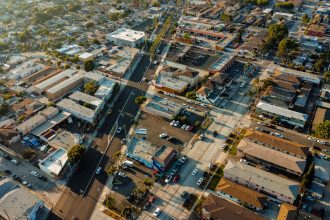
The first time I watched a bright blue dumpster crawl into the driveway on Sunset Boulevard, I thought it was an art installation. It arrived with the quiet authority of a giant wheeled piano — thunk, settle, a slow exhale of hydraulics — and for a moment the block held its breath. Neighbors paused on stoops, the air smelled faintly of coffee and sawdust, and a kid on a skateboard zipped past to get a closer look. ‘Is that for the movie crew or the house next door?’ someone asked. The answer, like most things in Los Angeles, was both and neither: this was the sort of daily choreography that keeps a city of millions from turning into a pile of yesterday’s couches.
Setting the Scene: A City of Projects
Los Angeles is a collage of workshops and windowed condos, historic bungalows in Pasadena, sleek new builds in West Hollywood, and beachside renovations in Santa Monica and Malibu. In neighborhoods from Echo Park to Torrance, dumpster trucks have become part of the skyline — sometimes as ostentatious as a film trailer, sometimes as ordinary as a mail truck. My story follows three characters across Greater Los Angeles: Maria, a homeowner in Highland Park who is gutting a Victorian bungalow; Jamal, a contractor in Burbank juggling three jobs; and Rosa, a property manager in Long Beach trying to keep a mid-century complex compliant with city recycling rules. Their lives intersect at a practical, gritty crossroads: dumpster removal.
Rising Action: Timelines, Permits, and the First Mistake
Maria’s renovation began with enthusiasm and an Etsy board full of inspiration images. The demo day arrived, dust motes dancing like miniature planets in the late morning sun. A crew swung sledgehammers, curtains of old plaster showered onto tarps, and the kitchen sink — a relic — was ripped out and tossed into the yard. By noon it was clear that a pile on the lawn wouldn’t suffice. ‘We need a roll-off,’ Maria told the foreman. He nodded and called Jamal, who had been renting dumpsters and coordinating pick-ups across Glendale, Burbank, and Hollywood for years.
‘Size matters more than people think,’ Jamal told Maria when he arrived to measure the driveway. ‘Ten yards for small cleanouts, twenty for typical home remodels, thirty or forty for big jobs. But weight can sneak up on you — dirt, concrete, tile — those will ding your bill.’ He showed her a laminated chart: dimensions, suggested uses, and the difference between a standard roll-off and a recycling-specific bin. Maria picked a 20-yard container; it fit the driveway but left little room for the delivery truck to swing. That oversight would teach them both about permits and logistics.
Key Insights Woven into the Story
As Jamal secured the dumpster, he shared the rules that make the job more complicated in places like Santa Monica and Downtown LA than in, say, a rural county. ‘If you plan to put a dumpster on the street, you need a permit from the city,’ he said, pointing to a faded utility cover. ‘Los Angeles Bureau of Street Services issues permits for the public right-of-way. For Santa Monica, the process might be even stricter because they prioritize recycling and public space.’ He explained that cities like Pasadena and Burbank might have specific requirements for stickers, hours of placement, and protections around sidewalks and hydrants.
Rosa’s story in Long Beach added another layer. Her complex had a mandatory recycling ordinance and specific disposal paths for electronic waste and appliances. ‘A lot of people think a dumpster eats everything,’ she said, handing me a flyer from the city’s sanitation department. ‘But e-waste, paint, solvents — those have to go to a household hazardous waste facility. Long Beach, like Los Angeles County, runs programs to accept those items. If you toss them in the dumpster, it becomes a hazardous disposal problem and you get fined.’ The punch of her statement landed like an unexpected clap of thunder on an otherwise sunny morning.
Practical Choices and Hidden Costs
Back at Maria’s house, Jamal outlined the cost picture. Basic rental includes delivery, a week on site, and pickup. But the sticker price rarely tells the whole story. Overweight fees for construction debris like concrete and tile can double the bill. There are additional fees for extended rental periods, and tonnage limits are tighter in some transfer stations. ‘Think of it as a layered invoice,’ Jamal said. ‘Base rate, landfill fees, overage, and specialty fees. We also pass through city permit costs if you need the dumpster on the street.’ He recommended planning the removal of materials that trigger extra charges — separate out dirt and masonry into a different truck, send metals to scrap yards for recycling, and segregate clean wood for reuse or chipping.
The scene in Burbank offered another lesson in timing. Jamal had to coordinate pick-ups around school zones and rush hours so the trucks could move through neighborhoods like North Hollywood and Silver Lake without causing traffic gridlock. ‘You don’t want a 40-yard dumpster blocking Sunset at five o’clock,’ he grinned. Timing, he said, was a kindness to the neighborhood and a way to avoid late fees for not moving the container in time.
Environmental Responsibility in Action
Late one afternoon, Rosa organized a community clean-up in Long Beach. Volunteers rolled dumpsters to the curb, sorted piles into recyclables, bulky items, and hazardous collections, and lined up a city truck to take electronics to a certified facility. ‘People respond when they see the system working,’ she said as the sun turned the harbor to gold. Her crew found old paint cans, a broken television, mattresses, and a mountain of cardboard. The team separated what could be salvaged. A local nonprofit took usable furniture destined for the landfill and redistributed it to families in need. It was a small example of circular thinking in a city that usually thinks in straight lines.
This scene highlighted how dumpster removal can be an act of stewardship as much as logistics. The more materials diverted from landfills — metals, wood, concrete re-used, electronics recycled — the less strain on Sunshine Canyon and other area facilities. Jamal, who once hauled a load illegally disposed at an unpermitted site, still winced when he talked about the fines and the reputation damage that can follow a careless act. ‘A clean job is a respected job,’ he said. ‘And in LA, reputation travels faster than traffic.’
Moments of Tension and Human Decisions
Midway through the project, a neighbor in Maria’s block called the city about the dumpster blocking the sidewalk. A polite citation arrived on a clipboard: temporary obstruction without a permit. It was a jolt, a bureaucratic cold shower in the middle of a warm day. Maria felt anger spike, then embarrassment, then a flush of empathy for the city worker explaining the rules. ‘We all want clean sidewalks,’ the officer said. ‘And permits help regulate where dumpsters sit so nobody ends up with a blocked emergency exit or a hydrant covered.’ They applied for the quick permit retroactively, paid a small fee, and adjusted the placement. Conversation on the block shifted from curiosity to cooperation; someone brought iced tea for the crew.
That small human scene underscores a recurring point: dumpster removal is as much about communication as it is about hauling. Talk to neighbors, post a notice if access will be limited, protect driveways with plywood, and consider the sightlines of delivery trucks. Jamal often left a polite card with his company number for neighbors to call if the container needed shifting. ‘It calms people,’ he said. ‘And calm keeps complaints from becoming citations.’
Resolution: A House Renewed, a Neighborhood Restored
By the time Maria’s dumpster was hauled away, the house looked like a blank canvas. The contractor had salvaged original molding, set aside bricks for a garden path, and arranged for the scrap metal to be recycled at a yard in Vernon. The neighbors came over to see the progress; someone remarked at how much lighter the street felt. Jamal collected payment, filed the permit closure, and left behind a small stack of plywood to shield the driveway edges. Rosa posted photos of the Long Beach clean-up on a neighborhood forum and encouraged residents to organize the next one. The threads of effort — homeowner, contractor, property manager — had woven a cleaner, safer community.
Takeaway: What to Remember and Do
If you live in the Greater Los Angeles Area and face a renovation, a major clean-out, or a construction project, remember these practical points tucked into the stories you just read: choose the right dumpster size (10-40 yards), separate heavy or hazardous materials to avoid overage fees, check for city permits before placing a container on public property, protect driveways and sidewalks, schedule deliveries outside peak traffic when possible, and prioritize recycling and reuse where you can. Call city offices or check municipal websites for specific rules in Los Angeles, Santa Monica, Pasadena, Burbank, Long Beach, and other cities. And above all, communicate with neighbors — a little courtesy goes a long way in keeping a project from becoming a neighborhood headache.
As the sun set behind the palms, Maria stood on her partially rebuilt porch and watched a truck drift away, its taillights a pair of steady beacons. Someone on the block strummed a guitar, a dog barked, and the scent of damp sawdust and fresh paint hung in the air. The dumpster, which had once been a stark blue rectangle intruding on the street, was now a memory: a temporary solution that had made the messy, noisy work of rebuilding possible. In a city always reinventing itself, sometimes the most important transformations begin with a simple, honest removal.