The day the old bungalow in Echo Park finally shed its last layer of wallpaper, Maria stood on the sidewalk with a steaming paper cup of coffee, listening to the rhythmic beep of a truck reversing into place. The air smelled like roasted beans and, oddly, like possibility — sawdust, citrus from a nearby tree, and the faint ocean tang that rides the breeze from Santa Monica. A hulking steel box lowered with a thunk onto her cracked driveway, red dust puffing into the morning light. “That sound,” she thought, “is the sound of chaos becoming order.”
The Setup: Why a Dumpster Matters in Greater Los Angeles
Los Angeles is a city of layers: hillside bungalows in Silver Lake, beachfront bungalows in Venice, the stately palms of Beverly Hills, and the industrial stretches of San Pedro. Each neighborhood has a rhythm and set of rules, and when homeowners, contractors, or renters need to clear space, rent a dumpster, or dispose of construction debris, those rules show up fast. Maria’s story begins in Echo Park but quickly threads through Glendale, Long Beach, Pasadena, and even a coastal swing to Malibu — because in Greater LA, waste doesn’t stay put.
When she called a local roll-off company, the dispatcher asked questions Maria had never considered: “What neighborhood are you in? Do you have a driveway? Will the dumpster sit on the street? Any heavy materials like concrete or roofing shingles?” It wasn’t small talk. In Los Angeles County, where streets are narrow, parking is sacred, and coastal ordinances can be strict, those details determine permits, placement, and price.
Rising Action: A Clock, a Permit, and a Heap of Decisions
“We’ll need a street permit if we can’t keep it entirely on private property,” the driver, Jamal, explained, leaning against his truck. He had the calm, practical cadence of someone who had seen entire kitchens and backyards disappear into steel containers. “In the City of Los Angeles, a temporary right-of-way permit costs extra. In Santa Monica, you’ll need to follow coastal guidelines and sometimes log your diversion of recyclable materials. Long Beach can be picky about hazardous items.”
Maria pictured the pile: cabinets, that old sofa with the ripped arm, the tiles they’d removed, a stubborn bathtub, and boxes of neglected keepsakes. She hesitated before tossing a cardboard box into the dumpster. Inside were framed photos and a child’s sketch. She fished them out, smoothing the creased papers, and felt a tug of loss and relief. “One man’s junk,” Jamal said, watching her, “another man’s story.”
Waiting a week for a permit is a story many Angelenos know. Hollywood renovations must be scheduled around filming, homeowners associations in Pasadena might demand specific placement, and the City of Los Angeles has enforceable rules for how long a roll-off can sit in the public right-of-way. Maria learned to think like a planner: measure, photograph, call, and confirm.
Key Insights Woven Through the Story
As the project rolled on, practical lessons unfurled like moving boxes. When Jamal showed Maria the inside of his truck — clipboards, permit packets, a chart of dumpster sizes — education arrived in plain sight.
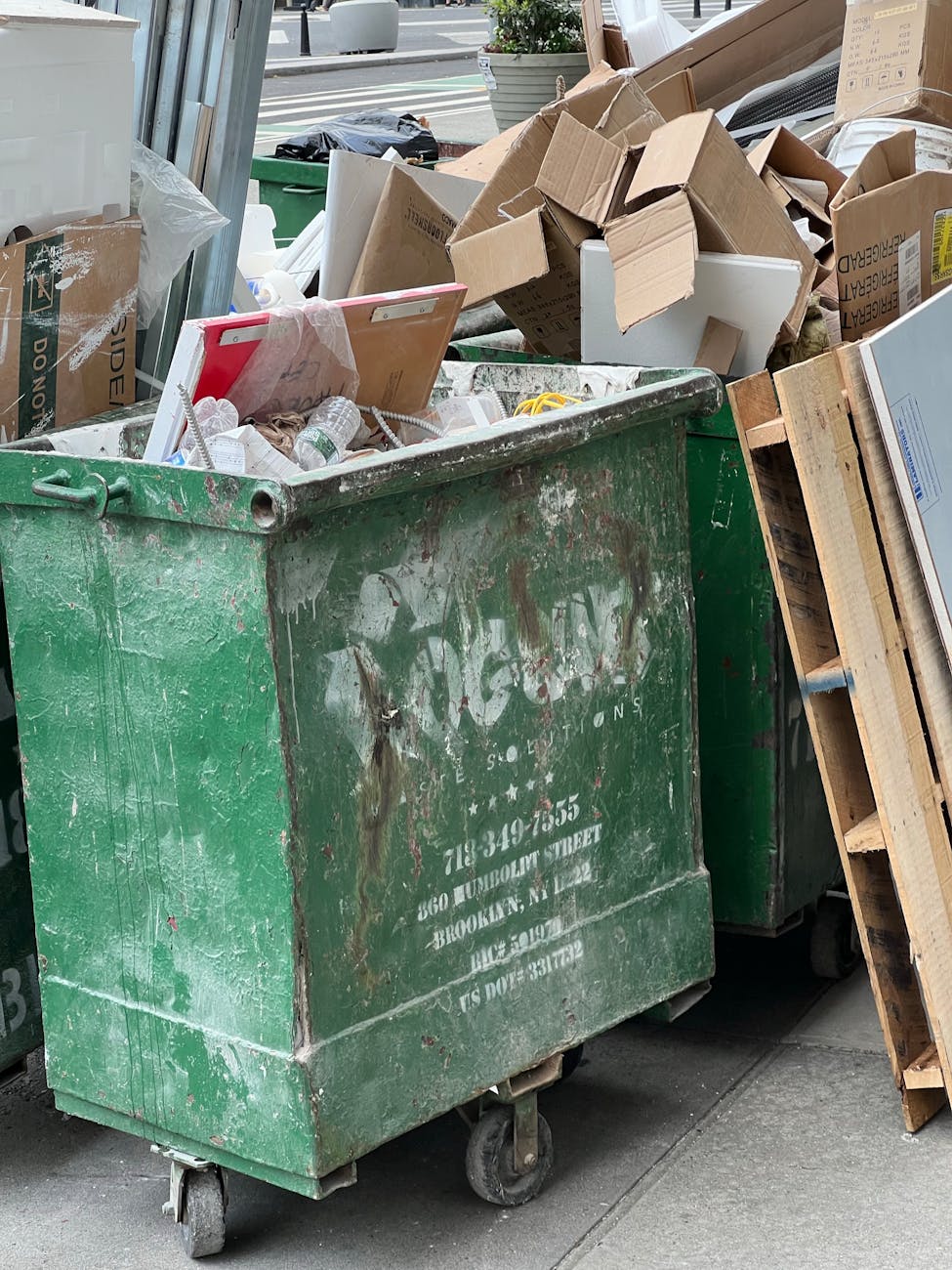
Size matters. Dumpsters typically come in 10, 20, 30, and 40 cubic yard sizes. A small kitchen remodel often fits a 10 or 20-yard container; a full home gut may need 30 to 40 yards. “You don’t want to over-order and block your driveway for a week,” Jamal advised, “but you also don’t want to under-order and pay for multiple trips.” In Burbank, where crews race against tight timelines, choosing the right size can shave days off a project.
Weight matters too. Concrete, soil, and tile are heavy. Many companies include a weight allowance; exceeding it triggers overage fees. In Torrance and Compton, where construction often involves dense materials, estimating weight becomes a budgetary skill. Jamal suggested stacking lighter materials atop heavier ones and breaking down bulky items: remove doors from cabinets, fold down frames, and flatten boxes to maximize space.
Permits and parking are a patchwork. In Los Angeles city limits, a Temporary Right-of-Way permit might be required if the container sits on the street. Someone in West Hollywood learned this the hard way after a two-week permit lapse led to a citation. Santa Monica and Malibu have additional environmental clauses: coastal cities often require contractors to divert recyclables and keep certain materials out of landfills.
Hazardous materials are non-negotiable. Paints, solvents, asbestos, and many electronics belong in special handling streams. In Long Beach, for instance, fluorescent tubes and batteries are regulated. Jamal made a stop at a household hazardous waste drop-off in San Pedro one afternoon, loading a small separate bin with old paint cans from a demolition. “We can’t put this in a roll-off,” he said, nodding. “It’s not just policy — it’s protecting the people who handle the waste and our beaches.”
Donations and reuse: Not everything in that mountain of debris needed to be wasted. Maria found an intact farmhouse sink and a stack of usable lumber. She set aside a corner for items that could be donated to Habitat for Humanity ReStore or a local thrift shop in Echo Park. “Sometimes it’s about thinking twice,” Jamal said. “A lot of people forget to check whether something could have a second life.”
Show, Don’t Tell: Scenes Along the Route
One afternoon, Jamal’s route took him from Maria’s driveway to a small renovation in Culver City. The sun was slanting low; palm fronds etched black against a pastel sky. At a Spanish-style bungalow in Silver Lake, a contractor named Raul walked the perimeter with him. “We keep it on the property whenever we can,” Raul said, pointing to a compact side yard where a 20-yard container fit like a missing puzzle piece. “But if we need it on the street, I get the permit and put out the cones three days early. Leave time for the inspector — or you’ll pay more in headaches than the permit cost.”
Meanwhile, in Venice, Jamal helped a young couple balance their surfboards against a fence as they decided whether to donate or discard. In downtown LA, they made a midnight drop for a small business that couldn’t close during the day. Each stop held its own rhythm: the smell of coffee at a Hollywood bungalow, the sound of waves near Marina del Rey, the metallic clang of a shed being dismantled in Glendale. The diversity of neighborhoods made every delivery its own choreography.
Practical Tips Embedded in the Narrative
Over coffee one morning, Maria compiled her lessons into a cheat sheet. She learned to do a pre-order walk-through, take photos of the proposed placement, measure the driveway, and check local municipality rules. She wrote down cost factors: size of the roll-off, weight, rental period, permits, and disposal fees. She learned to ask for itemized quotes and to confirm whether a company recycles or hauls to mixed debris landfills. “Ask about dumpster liners and covers,” Jamal said once. “In windy areas like Malibu or San Pedro, lids matter. You don’t want a neighborhood full of stray insulation and dust.”
Loading strategy was another art. Heavier items go in first, positioned toward the rear of the dumpster to keep it balanced during transport. Break down furniture when possible. Stack drywall flat, and keep hazardous items separate. For homeowners doing the lift themselves, Jamal offered one final rule: gloves, goggles, and the right hardware. “Lift with your knees,” he reminded, as if reciting a mantra. “And when in doubt, call a pro for heavy stuff.”
Resolution: A Neighborhood Transformed
By the time the last tile was swept and the final box placed into the dumpster, a new light fell across Maria’s kitchen. The bungalow exhaled. Neighbors stopped by — a barista from a nearby coffee shop, a painter from Hollywood, an elderly man who’d lived on the block since the seventies — each offering a small, approving smile. The steel box that had once seemed like an intrusion now looked like a sign of forward motion. Jamal came back to pick it up on a Saturday afternoon, the truck’s engine humming like a familiar song. As he winched the dumpster up, the neighborhood seemed to hold its breath and then let go.
On his way out, Jamal handed Maria a small packet: a recycling report detailing what portion of the load had been diverted, documentation for the permit, and a short list of local donation centers. “Keep this,” he said. “You’ll need proof if you’re selling the place or just want a clean record. And remember: a little planning saves you a lot of grief in LA.”
Takeaway: What to Remember and Do
If there’s a lesson that threads through Maria’s story and through many projects across Los Angeles — from Beverly Hills to Inglewood, Pasadena to San Pedro — it’s that dumpster removal is part logistics, part civic etiquette, and part environmental stewardship. Before renting a dumpster, check local permits and HOA rules, choose the correct size, separate hazardous materials, seek donation options, and confirm recycling practices. Communicate with your hauler, photograph placement, and always account for traffic and noise rules that vary by city.
In Los Angeles, where neighborhoods are as distinct as the people who live in them, a dumpster can feel like an invasion or a balm. Managed respectfully, it becomes a tool for renewal, a temporary stage where clutter exits and new life begins. Maria’s bungalow looked smaller and fresher, light streaming through the rooms where dusty debris once crowded the corners. The smell of sawdust was gone; in its place was paint and the quiet optimism of a project nearing its end.
Jamal drove away down a palm-lined street, the truck’s taillights winking as he merged into Santa Monica traffic. Maria stood on her porch, sipping the last of her coffee, watching the space where the dumpster had been as if it were the stage after the actors had left. The house seemed to breathe. Above the rooftops, the sky held a blush of orange, and somewhere in the distance, the surf sounded like an applause. It was, she thought, the sound of making room—for life, for art, for the next chapter.