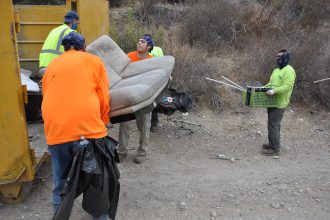
The first time I watched a 20-yard roll-off arrive, it sounded like a freight train cutting through my Echo Park morning—metal on metal, diesel coughing, the rubber of tires on hot asphalt. There was dust in the air that smelled faintly of sawdust and gasoline, and for a minute I thought the whole block was performing a choreographed ritual: neighbors pausing on stoops, a kid riding by on a skateboard, and a man in a faded cap shouting, ‘Watch your step!’ as the dumpster settled on my cracked driveway.
Setting the Scene: A House, a Plan, and a Deadline
My name is Maya. I’d bought a 1920s bungalow in Highland Park with more charm than usable closets. The plan—equal parts dream and delusion—was to gut the kitchen, tear out two layers of linoleum, and replace the sagging back fence before June’s first open-house. What I didn’t plan for was how quickly trash accumulates: plaster and lath, a mountain of tile, an old armoire that held the memory of three moves.
So I called a company out of Burbank. Marco answered: ‘We can get you a 10, 20, or 30-yard. Tell me what’s in it and where you want it.’ His voice was steady, the kind you get used to when you’ve handed someone a pile of your chaos and asked them to take it away.
Rising Action: The Small Decisions That Become Big Problems
That morning the dumpster arrived with a hiss and some thrumming power. I watched as two men jumped off the truck, grabbed a pry bar, and began to toss out decades of household neglect. ‘We’ll put it on the curb if you want,’ the younger one said, wiping sweat from his brow. ‘But you’ll need a street permit in LA. Santa Monica and Malibu are even pickier.’
He was right. Over the next week, I learned the rules of the road by reading city websites and calling municipal hotlines. If you set a container on public property in Los Angeles, you often need a right-of-way permit from the Department of Transportation. In Santa Monica, permits come with strict loading-hour restrictions and extra fees for obstructing parking. In Downtown LA, big sidewalk setbacks and underground cables make placement a puzzle. In Long Beach and Torrance, the rules change again; curb placement must avoid bus stops and trash collection days.
The tension crept in because the permit process could add days. ‘How soon can you legally have it on the street?’ I asked Marco. ‘Depends on where you are. Some places same-day. Others need 48 hours for the permit. We can hold it in the driveway too, but remember the weight—saggy driveways in Pasadena or Glendale? We’ve seen some collapse.’ He laughed, but there was an edge in his voice. ‘Measure twice. Place once.’
Key Insight: Choosing the Right Dumpster for the Job
There’s a kind of alchemy to size. Too small and debris overflows like a messy confession. Too large and you pay for empty space. When Marco rolled by with a 20-yard, he showed me how contents pack: the broken tiles form a base, wood and cabinets go in next, and the lighter stuff—insulation, boxes—fills gaps. ‘Weight’s the sneaky cost,’ he said. ‘A 10-yard can cost as much as a 20 if you pack it with demo rubble. Concrete and dirt get heavy fast.’
Practical rules I learned from the ten dumpsters that cycled through my block:
– Sizes: 10, 20, 30, and 40 cubic yards are common. 10-yard fits small cleanouts; 20-yard is usual for kitchen remodels; 30- and 40-yard are for major renovations, multi-room deconstruction, or commercial jobs.
– Weight limits: Most rentals include a weight allowance; exceeding it leads to per-ton fines. Concrete and tile will eat through a weight limit faster than plywood or drywall.
– Rental period: Many companies offer 7-14 days, with extensions for a fee. Coordinate delivery and pickup times to avoid lingering fees.
Scene: Negotiations, Smells, and Community
One afternoon, a neighbor from across the street—Mrs. Alvarez—knocked on my door, clutching a bag of cookies. ‘You’re happy with the noise?’ she asked. Then she leaned in and whispered, ‘We had a fly problem last summer when there was old furniture on the curb. Don’t forget to cover the mattresses.’ The smell of coffee and sugar lingered as she left.
It’s in these moments that dumpster removal becomes a community choreography. In Venice, a roll-off on the street draws tourists’ curiosity. In Inglewood, a large construction bin on a wide lot becomes a sign of transformation. In Pasadena, neighbors debate over the best hours for noisy pickups. The rules aren’t just municipal; they’re social.
Key Insight: What Goes in and What Has to Go Somewhere Else
Not everything is dumpster-friendly. LA County and city regulations prohibit hazardous materials—paints, solvents, asbestos, tires, certain electronics—from being tossed into standard roll-offs. For those items, you have options: Household Hazardous Waste (HHW) collection events around LA County, dedicated e-waste drop-offs, and specialized haulers for asbestos abatement in Burbank or Glendale.
Donations and recycling also matter. Appliances in working condition can be picked up by charities in Culver City or Echo Park. Salvageable wood or architectural elements often find new life at Habitat for Humanity Restores in Santa Monica and Long Beach. The City of Los Angeles has a Construction and Demolition (C&D) Debris Recycling Ordinance requiring diversion of a significant portion of C&D debris—so your contractor may need to document recycling for permits.
Rising Action Continued: Unexpected Costs and Simple Solutions
I hit my own bump when I scheduled pickup and the hauler called to say the truck couldn’t take on the load because of a buried roof truss sticking out. ‘You have to keep the load level with the rim,’ Marco said. ‘Otherwise it’s unsafe to haul.’ I spent an afternoon rearranging and compacting materials, feeling like a sculptor of rubbish.
Costs vary: base rental fees, tonnage fees, permit fees, and sometimes delivery/pickup windows that carry a premium. In Santa Monica or Malibu, curfew-like restrictions for loud operations can push crews to early mornings and higher labor rates. In contrast, a pickup in Compton or Gardena might be straightforward—but you still need to verify transfer station destinations and tipping fees. Sunshine Canyon Landfill in Sylmar and the South Bay transfer stations are common endpoints for mixed loads; recycling centers take separated material.
Key Insight: Finding the Right Hauler
Not all dumpster companies are created equal. Look for clear communication, a physical address, insurance, and transparent tipping fees. Many local companies in Los Angeles offer online quotes, flexible pickup schedules, and guidance on permits. Ask questions:
– Where does my waste go? (transfer station, landfill, recycling facility)
– What is included in the price? (delivery, pickup, days included, weight limit)
– Do you handle permits, or do I need to obtain one? (some companies will pull a street use permit for you)
Scene: A Late-Night Decision and a Small Triumph
Two weeks into the project, the dumpster was full. I was exhausted, sticky with drywall dust, and the house looked more like a prop warehouse than a home. It was raining thin, Pacific drizzle, when Marco’s truck pulled up for the final haul. He hopped out, slung an armful of tie-down straps over his shoulder, and said, ‘Looks like a good cleanout. You did the city and the planet a favor—did you separate the metal and wood?’
I thought about the bags of screws and the pile of copper pipe I’d kept aside. ‘We salvaged most of the metal,’ I said. ‘And the cabinets were taken by someone down in Hollywood.’ His face softened. ‘People forget that it’s a cycle,’ he said. ‘The thing you toss can be someone else’s beginning.’
Advice Woven into the Narrative
From my Bleeding-heart experiences and Marco’s practical wisdom, here are distilled tips for anyone in Greater Los Angeles embarking on a dumpster removal:
– Plan placement early: know if you’ll need a street permit and how long it takes—check city sites for Santa Monica, Los Angeles, Long Beach, Pasadena, Glendale.
– Right-size the bin: estimate debris types and weight; concrete, tile, and dirt add heavy surcharges.
– Separate recyclables and donations: appliances, metal, and reusable fixtures can reduce costs and meet C&D recycling rules.
– Beware of prohibited items: batteries, household hazardous waste, tires, and asbestos need special handling.
– Ask where your waste goes: transfer stations, landfills, and recycling centers differ in fees and environmental impact.
Resolution: The Open House and the Smell of Lemon Cleaner
By June, my bungalow looked less like a demolition site and more like a place people could imagine living. The dumpster, gone, left a crescent-shaped patch of cooling asphalt and a faint scent of diesel where it had sat. I remember the sunlight catching on the newly sanded counter and the distant rumble of the 110 freeway, like an urban lullaby. The house felt different: lighter, not just from the painting but from the act of clearing.
At the open house, Mrs. Alvarez arrived with fresh tamales and a grin. ‘You did good,’ she said. ‘No more piles. The street can breathe now.’ I thought of the crews from Burbank and the recyclers in Gardena, of Goodwill drivers who’d come for a couch, of the man who’d taken our old cabinets to a shop in Hollywood. The dumpster had been a mediator between decay and renewal.
Takeaway: Remember This Before You Haul
Dumpster removal in Greater Los Angeles is a small logistical epic. It asks you to balance municipal rules, neighborhood sensibilities, environmental responsibility, and budget. The best experiences hinge on planning and local knowledge: know your city’s permit rules, choose the right size, separate materials, and pick a hauler who explains where your debris will end up. And when in doubt, ask a neighbor—someone will have done it before, whether it was in West Hollywood, Boyle Heights, or Malibu.
On the last day, I stood on the porch watching the sunset paint the hills salmon and gold. A final truck rolled by, its engine a soft hum beneath the evening. Somewhere beyond the city lights, someone was feeding old wood into a kiln; somewhere else, tiles were being crushed for road base. The dumpster had been a pause in the city’s endless making and remaking—one metallic, noisy, necessary punctuation mark. I closed the door, the house smelling of lemon cleaner and new possibilities, and for a moment the city felt like it had exhaled with me.