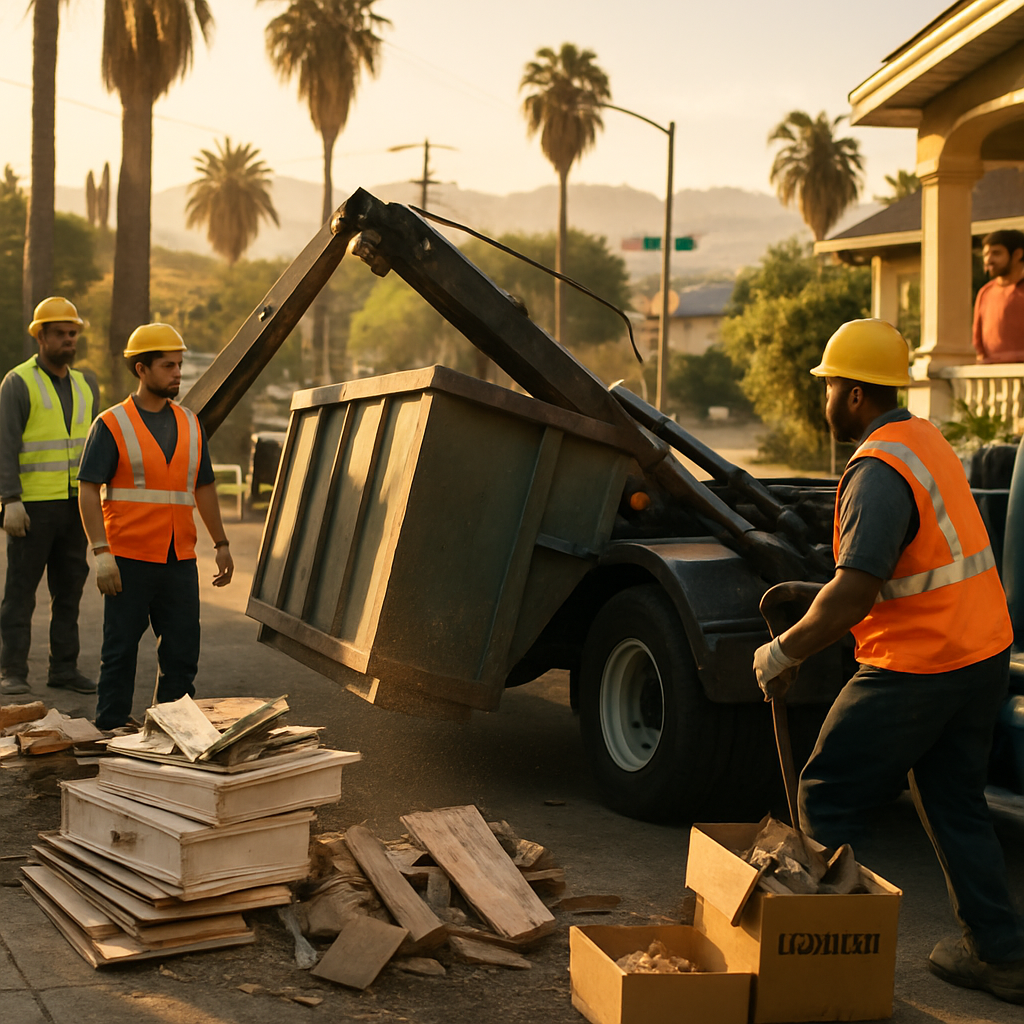
The first time I saw a dumpster like a living, breathing machine was on a Tuesday morning in Echo Park, when the neighborhood still smelled faintly of coffee and eucalyptus and the air held the possibility of rain. It sat at the end of a driveway like an uninvited guest—steel sides gleaming, paint nicked, a faint echo of old paint cans and sawdust. A man named Diego backed the truck in with a practiced hum, and for the next twenty minutes the neighborhood watched a small, noisy miracle that would change how a house felt by sundown.
Setup: Who Shows Up and Why It Matters
Maya, a schoolteacher in Highland Park, had decided to widen her kitchen an inch at a time over a three-weekend renovation. She called three contractors, one neighbor, and, eventually, a dumpster company recommended by her cousin in Burbank. “You don’t want to be that person with bags on the curb for weeks,” her cousin said. “Get a roll-off. It keeps everything tidy and legal.”
Diego’s company, Pacific Roll-Offs, worked across the Greater Los Angeles Area—San Pedro to Santa Monica, Pasadena to Long Beach. He’d learned to read neighborhoods the way other people read weather: Culver City’s early-morning joggers, Venice’s salty air and boardwalk chatter, Torrance’s calm industrial hum. Each place had its own rhythm and its own rules about where a dumpster could sit and what could go into it.
On the day of the drop-off, Maya’s street was a patchwork of Mission Revival houses, succulents in terracotta pots, and a neighbor’s Tesla idling in the driveway. The dumpster landed with a metallic clank that turned heads. “It feels like a garage band tuning up,” someone joked from a porch. But the sound also meant order: builders moving fast, torn cabinets leaving the house, and a plan to carry the old into the new.
Rising Action: The Tension Behind the Steel
Not all dumpster scenes are as tidy as Maya’s. Two weeks later, Diego found himself at a demo site in Hollywood where a small renovation had mushroomed into a full-scale gut job. Contractors argued in cartoons of dust while a rental parking spot was claimed, a city permit sat unopened on a clipboard, and a stack of old paint cans threatened to ignite a headache for everyone involved.
“We could just toss these in,” one worker said, waving a can of once-glorious teal. “They won’t know.”
Diego frowned. “You can’t. Those are hazardous. Household paints, solvents, batteries—those go to special drop-offs or an approved facility. If the city inspects and they find that, the fines aren’t pleasant. And it’s bad for the planet.”
Maya, watching from across the street as the crew wrangled drywall into the dumpster, remembers the smell of sawdust, wet concrete, and something sharper, like old varnish. The smell made her think about the invisible consequences of renovation—the way materials travel after they leave your home. Will they sit in a landfill forever? Will a local recycling center take them? Will a neighbor’s property be threatened by misplaced trash?
Key Insights: What Every Los Angeles Resident Should Know
By the time the job was done, Maya knew more about dumpster removal than she ever wanted to. She learned the sizes—10, 15, 20, 30, and 40-yard containers—and how those numbers translated into real life. A 10-yard dumpster is perfect for a small cleanout or garage purge; a 20-yard fits the average bathroom or kitchen remodel; 30 to 40-yard sizes suit whole-house demolitions. Weight mattered as much as volume—an oak wardrobe and a pile of drywall both take space, but the drywall hits weight limits faster, sometimes adding per-ton fees at the landfill.
Permits were another thread in the story. In the City of Los Angeles, if a dumpster sits on the street, it often needs a permit from the local authority—whether that’s DOT, Bureau of Street Services, or a city-specific office in places like Beverly Hills or Santa Monica. West Hollywood and Culver City have their own guidelines. In Long Beach and Pasadena, rules vary again. The main point: you can’t assume the curb is free for your roll-off. A misplaced dumpster can mean a ticket, a tow, or a delay that pushes a project weeks behind schedule.
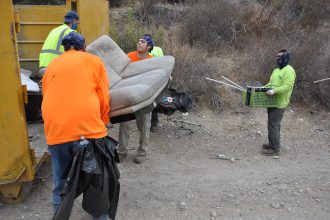
Then there was the matter of what could go in. Organic debris—yard trimmings and green waste—often has a separate, more eco-friendly destination and may have recycling programs available in places like Santa Monica and Los Angeles County. Concrete, brick, and dirt are heavy and sometimes charged at higher rates. Electronics, mattresses, tires, and hazardous materials require special handling and can’t go into a standard roll-off. “We always give a do and don’t list,” Diego explained. “When you know ahead of time, you save money and avoid surprises.”
Scene: The Drop-Off in Santa Monica
In Santa Monica, the ocean breeze helped carry the sawdust away. A young couple renovating a cottage near Montana Avenue wanted the dumpster parked on their driveway so the sidewalk stayed clear for neighbors and strollers. They chose a smaller 15-yard unit, enough for cabinets and tile plus a pile of old roof slates. The driver placed protective wood under the dumpster’s frame, a small courtesy that kept the driveway from being gouged and told the homeowners he’d be back in ten days unless they called sooner.
“We didn’t think about the weight of the tile,” the woman said. “We thought ’tile is small’—but it was heavy.'” The man laughed, shaking his head, and shelled out for an extra ton of capacity. They were relieved when Diego suggested donating a few fixtures to a Habitat for Humanity ReStore in Burbank instead of tossing them. “It’s amazing how one suggestion turns a pile into a story,” Diego said.
Practical Choices and Hidden Costs
A dumpster rental can feel straightforward until the math starts. Base rates often include delivery, pickup, and a set number of days—say five to seven—but additional days, overage fees for weight, hauling from specialized disposal sites, and environmental handling of prohibited items add up. Companies might charge fuel surcharges, weekend pick-up fees, or extra for narrow alleys in Silver Lake where manual placement is required. “Ask for an itemized quote,” Maya’s contractor told her. “It’s not rude—it’s smart business.”
Scheduling is a subtle art. Book early for summer months when construction booms across Greater Los Angeles. If you live in a community with complex parking (Beverly Hills, Hollywood, or parts of West Hollywood), coordinate with your dumpster company to handle permit acquisition. Many reputable companies will pull the permit for you for a fee; some require the customer to do it. Timing the drop-off for early morning helps avoid traffic snarls on the 405 and 10 freeways, and weekend drops sometimes cost more or require special scheduling.
Rising Resolution: The Clean Sweep
Weeks later, when the dust had settled and the new tiles gleamed under recessed lighting, Maya stood at her renovated window and watched Diego’s driver hook a chain to the dumpster. The engine growled, the container tilted, and the occupants of the neighborhood gathered—some to wave, others to nod in appreciation. A small crowd of children chased a runaway foam ball, and someone called out, “Nice work!” The dumpster rolled away, already a memory in the street’s timeline.
Diego took the load to a sorting facility near Carson where crews separated concrete from wood, metals from drywall, and salvaged anything reusable. He sent some wood to a mill in Downey that repurposed reclaimed lumber for benches and local artists. The old cabinets found a new life at a nonprofit in Compton that trained carpenters. Paints and solvents went to a hazardous waste facility. “We try to close the loop as much as possible,” Diego said. “Los Angeles is big, but the systems are here if you know where to look.”
Resolution: A Neighborhood Remade
By summer, Maya’s house was a small, shining example of careful renovation—solar shades on the south windows, a raised planter box heavy with basil and rosemary, and a kitchen island where friends clustered for wine. The dumpster’s absence felt like the last stitch in a long mending process: once messy, now tidy, the neighborhood moved on with a minor memory of disruption and a major gain in beauty and function.
Neighbors across the block began to consider their own projects—roof repairs in Glendale, a garage conversion in Burbank, a backyard overhaul in Long Beach. Each owner called different companies, compared quotes, and thought of permits. A conversation started about sustainability: where to donate, how to divert to recycling, and how to avoid old plaster with asbestos hidden inside. These were not romantic conversations, but they were practical ones—lifelines for a metropolis where construction and renovation are constant.
Takeaway: What to Remember and Do
If there’s a single image that stayed with Maya, it wasn’t the dumpster or the noise. It was Diego wiping his hands on a rag, standing in the late afternoon light, looking at a cityscape that included everything from the Santa Monica mountains to the industrial stretches near Carson, thinking about routes and regulations and the next call. It was the idea that something as ordinary as a roll-off container threads people and places together.
Remember these few things: choose the right size for your job, ask about weight limits and per-ton fees, clarify what is prohibited, and check on permits if the dumpster will sit on public property. Consider donating reusable items and separating recyclables early. Plan for traffic and neighborhood rules—Los Angeles is a mosaic of jurisdictions, each with its own rules. And finally, pick a company that communicates clearly and cares where your debris ends up. It changes everything.
When Diego left, the street returned to its natural sounds: a distant freeway, a dog barking, someone closing a gate. The dumpster had done its work and had been taken away, but the ripples remained: new cabinets, fresh paint, a neighbor asking about reef-safe sealants. The city moved forward, recycling its stories as much as its materials, and in the quiet left behind, Maya made a cup of coffee and stood at her new counter watching the late light pool like honey across the hardwood—proof that even the loud, metallic moments have a soft, human end.