The first time Maria saw the heap of plaster, torn tile, and sun-bleached two-by-fours in her Echo Park driveway, she felt the neighborhood breathe around her—children’s laughter from across the street, a garbage truck’s metallic rattle down Glendale Boulevard, the faint ocean salt that slips inland on warm afternoons. “How do we get rid of all this without turning the block into a landfill?” she asked, palms dusty, anxiety and possibility braided together. A roll-off dumpster sat idle on her curb like a sleeping dragon: useful, intimidating, and intimately tied to the fate of her little remodel.
Setup: A Remodel, a Timeline, and a City That Moves Fast
Maria’s project began as a single decision: knock out a partition between the kitchen and living room to let the light from the palm-lined street pour through. She hired a contractor, Jorge, who nodded and measured like a chess player mapping moves. “We’ll need a dumpster for the demo—probably a 20 or 30-yard,” he said, tapping his phone to show pictures of different sizes. The crew promised to be swift, but schedules in Greater Los Angeles bend around traffic, permits, and weather. There were neighbors to notify, a parking conflict on a narrow Echo Park street, and a permit to secure if the dumpster stayed on public property.
Between Beverly Hills’ manicured regulations and the relaxed, harbor-side pragmatism of Long Beach, the Los Angeles area demands navigation. Maria found herself researching: City of Los Angeles Bureau of Street Services requirements, Santa Monica’s coastal restrictions, Pasadena’s neighborhood associations, and the county transfer station hours. The questions multiplied: Where to place the dumpster? How big? What of the old fridge, the paint cans, the antique mirror with the cracked gilded frame she couldn’t stomach throwing away?
Rising Action: Calls, Quotes, and the First Dumpster
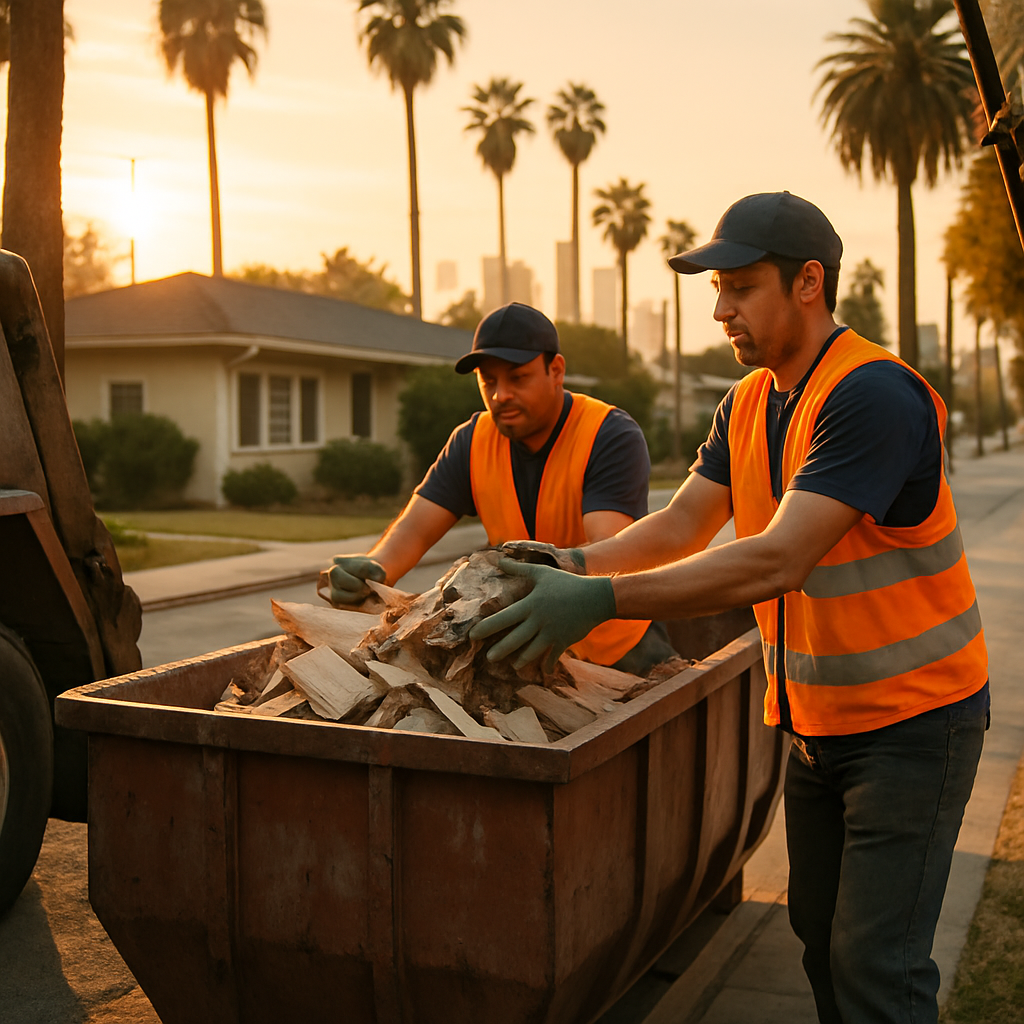
She made calls. One dispatcher in Burbank named Raul arrived in a diesel thrum with a truck that smelled like motor oil and lemon-scented disinfectant. He sized up the driveway, the curb, and the scarred asphalt. “You can fit a 20 here,” he said, voice low, as he set down wooden pads to protect the driveway. Maria noticed the soft scrape of metal on concrete, the way the truck’s rear lowered and the dumpster began to unfurl like a mechanical beast. The crew moved with practiced choreography—one person steadying the container while another threw in a bundle of drywall that sighed on impact like the exhale of a house.
Dialogue punctuated the day. Her neighbor Tony, watering his succulents, called over: “You doing a kitchen or making a movie set?” Maria laughed; Tony’s laugh was the kind that softened worries. “Kitchen,” she replied, but then added, half-joking, “Maybe both. Depends on whether I can keep the antique mirror.”
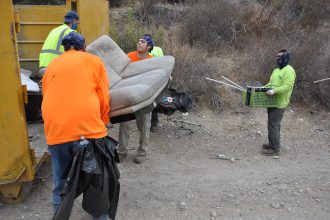
But not everything fit neatly into the dumpster. Raul frowned at a stack that included a windowpane and a rusting refrigerator. “No refrigerants in here,” he said, matter-of-fact. “We can’t take anything with CFCs or certain chemicals—state law, county rules. Electronics too need special handling.” The list read like a foreign language at first: hazardous waste, universal waste, asbestos protocols. At that moment the project stopped feeling like swinging a sledgehammer and started feeling like a lesson in urban stewardship.
Key Insights: Practical Lessons from the Street
As the days unfolded, Maria learned how dumpster removal actually works in the sprawling tapestry of Greater Los Angeles—lessons that came from real people, real permits, and real dust.
Dumpster sizes and how to choose: “Think in rooms, not cubic feet,” Jorge advised once, a cigarette between his fingers at a pause. A 10-yard dumpster is often described as a pickup-truck bed—good for small cleanouts or landscaping debris. A 20-yard fits the detritus of a small kitchen remodel or a one-bedroom demo. A 30- or 40-yard container suits larger renovations or full-house cleanouts. Visualizing the project saved Maria from ordering too big (wasted money) or too small (mid-project swap fees).
Permits and placement: In Los Angeles proper, when a dumpster occupies public right-of-way—think curb or street—a permit is usually required from the city’s Bureau of Street Services. In places like Santa Monica or Beverly Hills, additional rules or different departments may enforce coastal or residential protections. Raul mentioned that some cities restrict how long a dumpster can stay on the street. “We usually do a week to two weeks, but you can extend it if you call ahead,” he said.
What goes in and what doesn’t: Hazardous materials—paint, solvents, pesticides, batteries, certain electronics, and refrigerators with refrigerants—require separate disposal or certified contractors. Organic materials like yard waste often are diverted to composting programs, while construction debris like concrete or tile might go to transfer stations or recycling centers in Long Beach or San Gabriel. Maria learned to set aside anything reusable: cabinet hardware, reclaimed wood, and appliances that still hummed. She called Habitat for Humanity ReStore and a local charity in Inglewood, arranging pick-ups for the salvageable items.
Pricing and fees: Dumpster rental often includes a base fee for delivery and a set rental period. Tonnage overage fees can apply—the darker math of dumpsters. For a typical remodel in the region, Maria saw quotes ranging from a few hundred dollars for a small container to over a thousand for large, long-term jobs, plus disposal fees at landfills like Sunshine Canyon or transfer stations. Scheduling mid-week delivery and pick-up avoided weekend rush surcharges.
Environmental practices: The crew separated metals for recycling and diverted clean concrete for crushing and reuse when possible. “Los Angeles has been pushing this—keep useful materials out of the landfill,” Jorge said. Maria felt a quiet satisfaction handing over her old copper pipes to be recycled instead of tossed.
Resolution: A Street Reclaimed
As the final day approached, the dumpster was a ledger of transformation: stripped kitchen cabinets, plaster dust clouded like winter fog in the afternoon sunlight, a stack of framed prints bound in a trash bag—some things saved, some sacrificed. When Raul returned to haul it away, the neighborhood gathered in small clusters, curious and approving. He climbed into the cab, wiped his hands, and called back, “All set?”
Maria stood by the curb, feeling the weight of weeks dissolve as the truck’s hydraulics groaned and the container lifted like a fortified door. The city hummed on—distant sirens, the whisper of palm fronds, a toddler’s squeal—while the dumpster tilted and drained into the cavernous truck. For a moment, she thought of the gilded mirror. She had decided earlier to donate it, and the knowing had been an antidote to wastefulness: tangible memory moving to someone else’s hallway.
When the truck engine faded, the driveway looked different—cleared, staged, like a promise. The team spread tarps, swept bristles along the pavement until particles of drywall shimmered like silver dust in the late sun. Maria hugged Jorge, who grinned and said, “Now, the real transformation begins.” The street smelled faintly of diesel and eucalyptus. Tony waved, watering his succulents, his plants somehow more forgiving of change than people.
Takeaway: What to Remember and Do
If you find yourself in Maria’s shoes—over tiles and under eaves in Los Angeles, Long Beach, Santa Monica, or anywhere in the greater basin—remember the practical and humane steps that tether demolition to dignity.
Plan ahead: Estimate waste by project type, pick an appropriate dumpster size, and book with buffers for delays. Check local rules: street permits are often required for curb placement; coastal and upscale municipalities may have extra restrictions.
Separate and salvage: Set aside hazardous materials for specialized disposal, earmark reusable goods for donation, and segregate recyclables. Contact local charities—Goodwill, Habitat ReStore, or community centers in Pasadena or Culver City—to redirect items that can be reused.
Protect property: Use driveway pads, keep loads below rim height, and avoid placing extreme weight on soft driveways. Communicate with neighbors—simple notices can defuse frustrations and build goodwill.
Work with experienced local crews: Drivers and haulers know the routes, the transfer stations, and the paperwork. A good operator in Burbank or Torrance can save time and money by advising on permits, landfill fees, and preferred disposal sites.
By the time Maria’s kitchen doorway opened to the morning sun, her block had resumed its ordinary rhythm. Laundry flapped on lines two houses down; a dog barked at the mail carrier; a breeze carried the distant crash of waves from Long Beach like a memory. The empty space where the dumpster had sat felt ceremonial, as if the neighborhood had permitted the house to shed its old skin.
She kept one final look for herself. The city’s skyline was a blurred watercolor—downtown Los Angeles punctuated by cranes and glass, the Hollywood hills a jagged silhouette, the Santa Monica mountains a low hum. Maria imagined the new doorway framing that view, a ribbon of afternoon that would spill across new floors. In the rearview mirror of the departing truck, sunlight knifed through palm fronds and dust motes danced like tiny satellites. For a brief, honest moment, the work felt like an offering: what was cleared away made space for something else—better, brighter, and, importantly, more deliberate.
When the last light hit the street, painting the driveway gold, Maria turned to her small, half-unpacked toolbox and smiled. The city exhaled. Somewhere in Inglewood a crew finished their own job. In Long Beach, gulls argued over scraps. And in the emptied space where the dumpster had once been, a new doorway waited, open as an invitation to begin again.