They say Los Angeles has a smell — salt from the coast, exhaust from the freeways, a hint of citrus from backyard trees — but that Thursday morning it smelled like old paint and fresh-cut plywood, with a metallic tang from the city’s first light. Maria stood on her Silver Lake porch, hands in her hoodie pockets, watching a faded red roll-off dumpster be eased into place by a man named Andre who smelled faintly of coffee and diesel. “Twenty-yard? Are you sure?” she asked, squinting at the rectangle of metal that seemed larger than her problems.
Early Stirrings: The Call That Started It All
Three months earlier, Maria had inherited her aunt’s craftsman bungalow in Highland Park. What was supposed to be a sentimental restoration turned into a domino of decisions: demo the sunroom, strip old wiring, remove decades of accumulated belongings. She called a contractor who recommended a dumpster. “It’s the simplest way to see progress,” he said. By the time the contractor left, the house looked like a museum of use and memory — stacked boxes, moth-eaten curtains, a cracked bathtub, and a small, stubborn oak table that refused to be romanticized away.
Stakes Rise: Permits, Neighbors, and the City
What Maria didn’t expect were the small, specific rules that govern waste in Greater Los Angeles. Andre had a permit sticker on his truck and a clipboard with a yellow sheet. “If that dumpster sits on the street without the LADOT permit, it’s a ticket,” he said, tapping the sticker. The neighborhood, with its narrow streets and palm-shadowed sidewalks, had a rhythm — morning dog walkers, mail carriers, a woman who practiced tai chi on her stoop. The city had rules that intersected with that rhythm: curb placement, how long you could keep a roll-off, and which materials were allowed. “You need a permit for curb placement in L.A., Santa Monica doesn’t play, and some HOAs in Beverly Hills have their own list,” Andre added.
Loading the Story: Decisions, Sizes, and Costs
Maria learned quickly that dumpster removal is not just brute force. There are sizes — compact 10-yard units for small renovations, 15- and 20-yard workhorses for medium remodels, and 30- to 40-yard behemoths for major projects. Andre recommended a 20-yard for the bungalow. “Ten might be tempting, but you’ll max it with demolition debris,” he said. He breezed through the practicalities: weight limits (extra tons trigger overage fees), allowed contents (wood, drywall, roofing, non-hazardous household junk), and forbidden items (paint cans with wet paint, asbestos, certain batteries, and e-waste require special handling).
On the Ground: The First Load
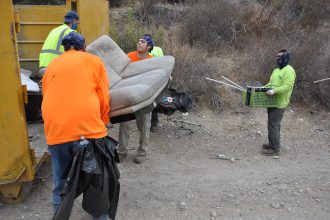
The first hours were almost cinematic. Neighbors peeked over hedges as Maria and a crew of two began hauling out decades of life: a set of enamel plates, a stack of vinyl records, a floral dress that smelled faintly of a wedding. The dumpster’s rim became a stage for discarded memories. “Look at this,” her neighbor Jorge called, holding up a photograph of a younger Maria and her aunt. For a moment, work slowed; the city’s hum felt distant. Then an item after another found its place in the metal mouth, the sound of thuds and shouts mixing with a gull’s cry from the direction of the 101.
Key Insights Along the Way
Between tasks, Andre taught Maria the rules that most people learn the hard way. Permits: in Los Angeles you apply through LADOT for street occupancy; expect 24 to 72 hours processing for routine requests. In Long Beach or Pasadena, the city websites have different forms and sometimes different fees. Timing: weekends can be pricier, and busy seasons (spring cleaning, post-winter remodels) can book haulers out for days. Placement: protect your driveway with plywood if the dumpster sits on your property; if it sits on the street, it must be a certain distance from fire hydrants and driveways. Recycling: LA County encourages diversion of construction and demolition debris — wood, metal, concrete — to recycling facilities, and some haulers will separate materials for a reduced landfill fee. Hazardous materials: older homes often hide asbestos in roof tiles or vermiculite insulation; those items must be handled by licensed abatement contractors, and you’ll need proper manifests.
Complications: The Neighbor and the Noise Complaint
By the second day, tension crept in. A woman across the street, wearing oversized sunglasses and a manicured scowl, left an anonymous note for the city complaining about the dumpster’s placement. Maria’s heart sank. She imagined fines, delays, and the sentimental items becoming a public dispute. Andre calmed her. “We’ll call the hauler’s office. Sometimes they move it into the driveway or file a different permit. Don’t worry—this happens more than you’d think in West Hollywood and Culver City.” He was right; a quick phone call and a few signatures later, the hauler moved the dumpster two houses down to avoid blocking a neighbor’s view and put it back at dawn when the city inspector cleared it.
Practicalities Woven with Story
There are small arts to loading a dumpster well. Andre showed Maria how to place heavy items like tile or concrete slabs at the bottom, distribute weight evenly to avoid tipping, and never exceed the dumpster’s “fill line” — overfilling can lead to safety hazards and refusal at the landfill. He advised renting a dumpster for the right duration: a weekend for a quick cleanout, a week or two for a renovation. Cost-wise, she discovered that in Greater Los Angeles, a 20-yard dumpster typically runs from $350 to $650 for a week, depending on weight and local disposal fees. Same-day drop-offs exist but carry a premium; booking 48–72 hours ahead gets you the best rates and availability during busy months.
Environmental Threads: Recycling and Donation
As the pile of debris grew smaller and the crew emptied the last of the drywall, Maria felt a twinge of obligation. “Can anything be salvaged?” she asked, holding up a lamp with a cracked shade. Andre nodded. “We work with local reuse centers — Habitat bins, Goodwill pickup sometimes, and the City of L.A. has e-waste drop-off days. Santa Monica has rigorous recycling rules, and Malibu’s transfer station has different operating hours — it pays to check.” They separated a small pile for donation and called a local nonprofit to pick up usable furniture. The city’s push for diversion showed a practical side: reducing landfill fees, avoiding heavy disposal surcharges, and contributing to materials that could be repurposed.
Unexpected Discoveries: Memories Among the Rubble
In the bottom of the dumpster, as the sun slid low and the Hollywood Hills caught a fleeting glow, Maria found an old letter wrapped in wax paper. It was from her aunt — a short, affectionate note about repainting the porch and planting succulents. Andre handed it back like it was the last piece of the house’s soul. “You don’t have to toss everything,” he said quietly. “Some things belong where they started.” She paused, then placed the letter in a small box and put it on the passenger seat of her car. The dumpster hummed like a stomach settling into sleep, metal cooling with dusk.
The Final Haul: Closure and Clean Slate
By dusk on the third day, the last wheelbarrowful disappeared into the dumpster. Neighbors who had once peered over hedges waved, some with curiosity, some with relief. The driveway looked different: cleaner, open, an invitation to new plans. Andre wiped his hands on a rag and handed Maria a business card. “If you need us for the next phase — roofing, concrete, a garden cleanup — call. We have crews in Torrance, Burbank, and Long Beach, all familiar with local permits.” She laughed and thought about the logistical knots that had been untied: the right dumpster size, permit navigation, material separation, and the slow, steady act of clearing out space for something new.
Final Notes and What to Remember
Walking into the bungalow that night, Maria turned the porch light on and let the house breathe. The city outside hummed with a thousand other small decisions: someone in Venice strumming a guitar, a coffee shop in Pasadena closing its shutters, a film crew in Culver City wrapping for the night. The dumpster, now gone, had been more than a receptacle; it was a tool that organized grief, facilitated change, and taught lessons about living in a city with rules and rhythms. If you’re planning a cleanup or remodel in Greater Los Angeles, remember these practical takeaways: choose the right dumpster size, protect property with plywood, understand local permit requirements (LADOT for L.A., different forms for Santa Monica, Pasadena, Long Beach), separate recyclable and hazardous materials, book ahead during busy seasons, and consider donation options first. And if a neighbor complains, seek a solution — a small move, a conversation, a permit adjustment — and keep a calm voice when you explain the plan.
Andre left as the streetlights blinked on, his truck a dark silhouette against the skyline. Maria sat on the porch with her aunt’s letter in her lap, listening to the distant freeway like a promise. The house felt quieter, not empty, but ready. Somewhere between the first thunk of a discarded table and the last crunch of gravel under the truck’s wheels, she had cleared more than debris; she had created a space where new stories could begin. The final image of the night was simple: a small, warm light in the bungalow’s living room window, a hint of lavender on the sill, and the city — always busy, always restless — folding another day into memory.