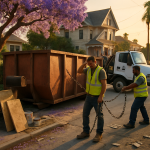
The first time I smelled diesel and citrus paint together, I thought I was dreaming in color. It was an early morning in Highland Park, and a battered red dumpster sat like a hulking island in the middle of a front yard, edges rimed with dust and drywall. Maria, hair tied in a paint-streaked bandana, leaned against the mailbox and watched Alex, the driver, wheel the dumpster into place. ‘You’d be surprised how many stories a pile of trash can tell,’ he said, his voice a mixture of humor and quiet pride.
Setting the Scene
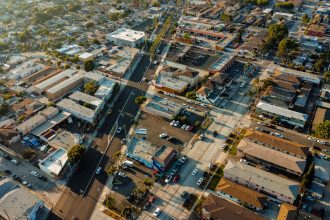
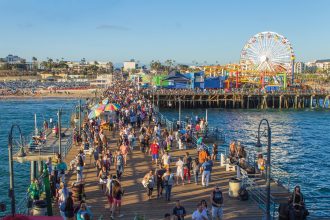
Greater Los Angeles unfolds like a patchwork of lives—bungalows in Pasadena, luxury renovations in Malibu, mid-century flips in Echo Park, and commercial clean-outs in Long Beach. Each neighborhood carries its own rhythm: the surf-scented air of Santa Monica, the freeway hum through Burbank, the palm-lined boulevards of West Hollywood. Alex’s company, Coastal Haul, moves through these rhythms every day, delivering dumpsters and taking away the hulking, unwanted relics of projects and life changes.
On that morning, Maria was renovating her old Craftsman. She’d cleared out a lifetime of accumulated things—cracked ceramic pots, ancient VHS tapes, a stack of newspapers bound with twine. She had called Alex because she needed someone who could not just haul away waste, but understand the city’s rules, the local disposal points, and the best ways to recycle materials without getting slapped with fines.
Rising Action: The City’s Rules Meet Human Stories
As the crew began to load, a neighbor from down the block—an elderly man named Tom—came over with a battered cedar chest and a story. ‘This chest came from my grandmother’s house in Highland Park,’ he said. ‘I can’t take it to the curb myself anymore.’ The chest went into the dumpster, and Tom’s presence turned routine hauling into something quieter, humane. Yet within an hour, complications began. A heap of old paint cans was discovered at the bottom of a box of tools. Someone had mixed drywall with garden soil. A box of broken CFL bulbs glinted dangerously.
‘Hold up,’ Alex called. ‘Those paints and bulbs can’t go in here.’ He explained to Maria that in the City of Los Angeles, hazardous materials like paints, solvents, adhesives, electronics, and certain batteries must be handled differently. ‘We can take the general construction and household junk,’ he said, ‘but anything hazardous needs to go to a proper drop-off or a specialized hauler. Otherwise, we risk contamination and fines.’ His tone was matter-of-fact, but you could see the tension, the way a wrong move could upend the whole job.
Alex jumped in his truck and threaded his way through Pasadena traffic, past Burbank’s studios and under the Santa Monica Freeway, to the local transfer station to confirm. Meanwhile, Maria stood by the dumpster, feeling a strange mix of liberation and grief as decades of possession became debris.
Key Insights Woven into the Story
As Alex drove, he spoke into his headset and then to Maria when he returned. ‘Permit, size, and load are the three things people forget,’ he said. ‘In the City of Los Angeles, if you want to place a dumpster on the street or curb, you’ll need a permit—especially in areas like West Hollywood or near commercial strips in Inglewood or Torrance. On private property, you don’t, but because many homes have narrow driveways, we sometimes need to put the unit on the curb.’ He sketched a quick map with his finger in the dirt, naming neighborhoods: ‘If we’re dropping at the hill in Glendale or a remodel in Long Beach, the rules and fees can change.’
He continued, ‘Sizes usually run 10, 20, 30, up to 40 yards. A small kitchen gut uses 10 to 15 yards; a whole-house demo uses 30 to 40. Weight matters too—concrete and soil can eat up your weight allowance fast. And the extra big trap? People overfill. If debris sticks out above the top rail, it can be unsafe for transport and costs more.’ Maria nodded, taking it in. She had imagined a single dumpster would fix everything. The reality had subtler edges.
‘And don’t forget green waste or recyclable materials,’ Alex added. ‘L.A. has strong recycling programs. Wood, metal, and cardboard often have separate streams. We try to divert as much as possible—mattresses go to specific facilities, electronics to e-waste centers. In Long Beach and Torrance there are convenient transfer stations that accept specialized loads, and in Santa Monica there’s a focus on construction recycling for coastal projects.’ His knowledge flowed like a practiced route map, built from years of trips across the 405 and Pacific Coast Highway.
Tension and Choices: Sorting, Permits, and the Clock
The crew set to work with a rhythm—shove, lift, level, repeat. At noon, a city inspector named Manny arrived. He checked the permit work order on his tablet and raised an eyebrow when he saw that the dumpster would be on the curb. ‘We’ll need the temporary street use permit filed,’ he said gently. ‘Also, make sure the load doesn’t contain hazardous waste, and secure the sides for transport.’ There was the brief, administrative friction that often defines city projects, but Manny’s helpful tone eased the sting.
Late afternoon brought another tension: a sudden rain shower, rare but fierce. The rain turned drywall dust into a plastery paste and made the load heavier. Alex called his dispatcher to extend the pickup window. ‘Rain adds weight. We can still get it, but extra fees may apply if the weight exceeds the rental allowance,’ he said. Maria felt the tug between moving forward and doing it right. ‘We don’t want to toss something into the wrong pile just to be done,’ she said. ‘This house deserved better than that.’ Her conviction reshaped the urgency into care.
Solutions in Motion
They adapted. Paint cans were set aside for an HHW (household hazardous waste) drop-off in Glendale, old TVs and a laptop were marked for e-waste recycling in Long Beach, and a load of construction wood was separated for a recycling center in Santa Monica that reclaimed lumber. Alex’s crew called ahead to transfer stations in Torrance and Pasadena to confirm acceptance, and negotiated times to avoid peak traffic on the 101 and I-10—because in Los Angeles, time on the road is a cost almost as real as the dumpster itself.
‘People think a dumpster is just a bin,’ Alex said as he sealed the straps before hauling off, ‘but it’s a micro-logistics operation. You have to know the laws, the local options, and have the right size and schedule.’ He placed a small paper tag on the dumpster with the pickup date and a checklist: permit, hazardous items removed, weight estimate. Simple things like a checklist made the difference between a stress-filled week and a smooth project.
The Resolution: A Neighborhood Breathes Easier
By evening, the driveway looked almost new, not because the house had changed, but because the space had been cleared with intention. Maria stood at the threshold, barefoot on the cool concrete, watching the sunset turn the hills gold. Tom, the neighbor, sipped a thermos coffee and smiled as he watched the last of the crew drive away. ‘Feels lighter,’ he said. ‘Like when you finally close a heavy door you’ve had open for years.’ Maria laughed, and for a moment the city seemed to exhale with her.
Alex drove the load across the city—first to a recycling yard in Santa Monica to drop wood and metal, then to an e-waste facility in Long Beach, and finally to a permitted transfer station in Glendale for the rest. The trash found new endpoints: mattresses destined for recycling, paint and solvents bound for hazardous waste processing, and recyclables separated for reuse. Each stop was a small redemption for material that might otherwise have been buried or burned.
Takeaway: What to Remember
From Alex’s practical wisdom and Maria’s mindful approach, a few truths emerged: plan ahead, pick the right size, know your local rules, sort hazardous materials separately, and use reputable local haulers who know transfer stations and recycling options across Greater Los Angeles. A good hauler can save money and protect the environment; a careless one can invite fines and headaches. In neighborhoods from Malibu to Burbank, the same rules bend in slightly different ways—so specificity matters.
‘And one last thing,’ Maria said, leaning on the mailbox as the streetlight blinked on. ‘It’s okay to let go. The dumpster took all that weight so we could start again.’ Her voice carried across the quieting street, a gentle benediction. The story of a single dumpster, it turned out, was also a story of community choices and the city’s invisible systems that keep the wheels turning.
Final Image
As the truck backed up and lifted the dumpster into the fading light, the LA skyline burned orange behind it. Palms stood like dark sentinels against the sky. The dumpster, loaded with decades of collected life, lifted smoothly and disappeared around the corner, bound for many destinations. On the curb, Maria turned the key in her front door and felt the house answer back—a quieter, cleaner echo, ready for the next chapter.