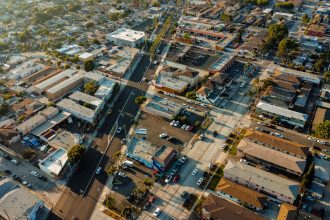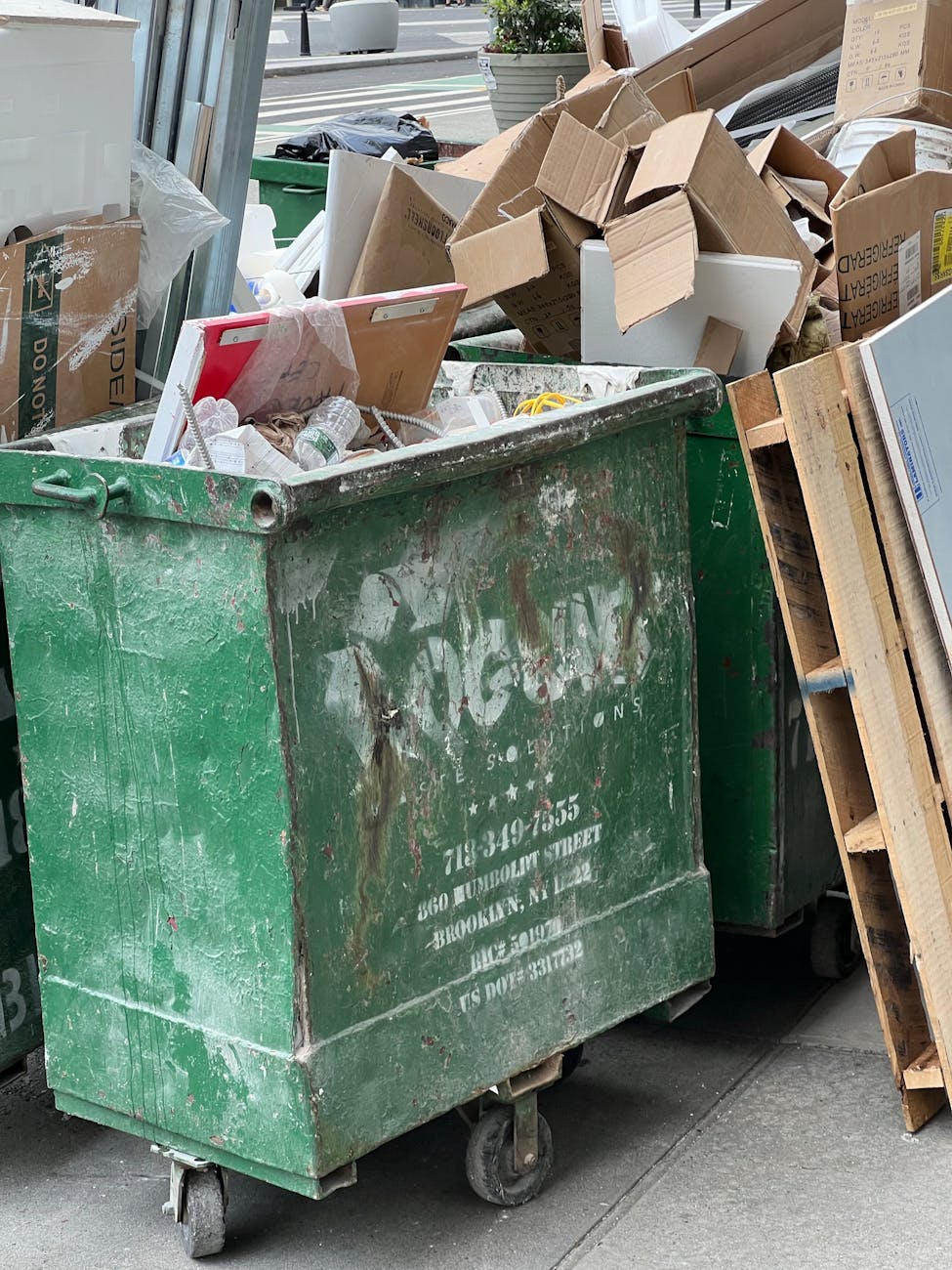
The first sound that morning wasn’t the gulls over Santa Monica or the distant rumble of the 405. It was the metallic clank of a gate and a low, responsible rumble as a roll-off dumpster lowered onto the cracked concrete of my Pasadena bungalow. A cloud of dust rose like a small gray tide, and for a moment the street smelled of hot metal and old wood. I had imagined this day for months—boxes stacked in the garage, a pile of forgotten furniture on the porch, the cupboard of an apartment finally emptied after an aunt’s long life—but the reality was louder and messier than I’d pictured.
The Setup: Why a Dumpster in the City?
Los Angeles is a city of layers: palm trees over concrete, bungalows beside new glass apartments, history in every stucco crack. My house in Pasadena collected things—every renovation, every yard clearance, every move. When my neighbor Rosa from Glendale stopped by with coffee and raised an eyebrow at the heap of drywall and old carpeting, she said softly, ‘You can’t keep living inside a storage unit that forgot to close.’ Her words became the plan. We hired Migra, a hauler from Inglewood recommended by a contractor in Silver Lake, and arranged for a roll-off dumpster to come the next morning.
Migra arrived on time, brewed black coffee the way only true Angelenos can—strong and sugarless—and walked the property like a scout. ‘We’ll need a 20-yard for that,’ he said, tapping a pile of plaster. ‘But if the city requires a street permit or the HOA has rules, we sort that before we drop it.’ That sentence pulled me off autopilot. The Greater Los Angeles Area isn’t a single permit; every city—Los Angeles, Santa Monica, Burbank, Long Beach, Torrance, Inglewood, Pasadena—has different rules. Suddenly the project felt less like tossing junk and more like orchestrating a small civic operation.
Rising Action: Rules, Roadblocks, and the Smell of Old Wood
We learned fast. Placing a dumpster in front of a house in Los Angeles often means applying for a street permit if the container touches the curb or blocks parking. In Santa Monica and some parts of Westwood, permits and time limits are tighter. ‘In Hollywood they make you move it by 7 a.m. if it’s on the street during filming,’ Rosa joked, but she wasn’t entirely wrong—each municipality has its own set of restrictions and fines. My neighbor across the street, an elderly man named Mr. Castillo, remarked, ‘In East LA they once towed a dumpster and charged the owner twice—city fines and impound fees. Learned the hard way.’ We started calling city halls, the Department of Public Works, and the haulers’ hotlines until we had a small folder of requirements.
Migra and his crew did more than drop the metal box. They placed plywood on my driveway to protect the asphalt from gouges and used ratchet straps and wheel chocks to make sure the dumpster wouldn’t slide on the slight incline. ‘Always protect the driveway,’ he said, hands steady as he hammered a wooden pad. ‘And watch the weight. Most roll-offs have weight limits. You could have a dozen yards of debris, but if it’s heavy concrete or brick, you’ll pay extra to haul it.’ He had a list in his head: typical sizes—10, 15, 20, 30, and 40 cubic yards; common prohibited items—paint cans, tires, certain electronics, solvents, and asbestos-containing materials; and the less obvious: ‘No matter how sentimental you are, old batteries and bulbs can cause a dangerous leak if they break during transit.’
There was also the emotional labor. I stood with photographs in my hand, deciding which pieces to keep. ‘My grandmother made this shelf,’ I told Rosa, and she put a comforting hand on the wood. ‘Take a photo. Let the memory live there for a bit.’ We laughed and cried as we cleared; the old mattress exhaled dust like a tired animal when we dragged it to the curb.
Key Insights Woven into the Story
Between the sweat and the dust, practical lessons emerged. First: choose the right container. For a small kitchen renovation in Culver City, a 10-yard dumpster often does the trick; for a whole-house cleanout in Burbank, 20 to 30 yards becomes safer to avoid multiple hauls. Second: always ask about permits. If the dumpster sits on a public street in Los Angeles, you may need a permit from LADOT or the local city transportation department. Third: be mindful of weight fees and tipping fees at transfer stations—concrete, soil, and tile push charges higher than wood and drywall.
We learned the difference between ‘roll-off’ and ‘front-load’ dumpsters, and why residential customers in neighborhoods like Echo Park might prefer a roll-off for a weekend project but a small front-load bin for ongoing remodel waste. We also discovered disposal alternatives: Santa Monica and Long Beach have thriving recycling programs and transfer stations that accept separated green waste and metal. ‘If you’ve got wood in decent shape, call a donation pickup,’ said Rosa. ‘Habitat for Humanity ReStore and local charities often pick up appliances and doors, and it’s better for the planet and your conscience.’ She was right; a battered dresser that once held my aunt’s linens found a second life at a ReStore near Torrance.
Migra emphasized documentation. ‘Get the weigh ticket,’ he told me as we signed paperwork. ‘You want a manifest or a weigh slip showing the truck’s load at the transfer station. It proves you didn’t illegally dump.’ In California, transparency matters—licensed haulers should provide itemized invoices and, when relevant, manifests for hazardous materials. For commercial projects, businesses must follow state mandates for recycling and organic waste reduction like SB 1383, which pushes for the recovery of edible food and organics. For homeowners, the take is simpler: separate your recyclables, keep hazardous waste out of the dumpster, and ask your hauler how they handle materials.
The Turning Point: When a Permit Almost Derailed Us
Three days in, a letter from the homeowners association landed in the mailbox. They said the dumpster couldn’t be in front of the house during a scheduled street cleaning and threatened a fine. Panic settled like a cool fog. The provider had scheduled pick-up for Saturday, but the HOA insisted on a removal job before Friday. My phone became a hotline of coordination: calls to the hauler for an earlier pick-up, a quick permit expediter in downtown LA who charged a small fee for navigating the city’s forms, and a neighbor who volunteered a driveway space for temporary storage. Miguel, wiping sweat from his forehead, muttered, ‘This is why you plan for a buffer day.’ He swung his arm toward the dumpster and said, ‘Don’t let the city catch you off schedule.’
We moved quickly, stacking the last of the drywall and folding the old futon mattress. By Friday evening, the dumpster was half-full, the paperwork filed, and the HOA appeased. Mr. Castillo came over and peered into the bin, nodding like an old judge. ‘You did good,’ he said. ‘A clean house is a clear head.’
Resolution: The City Breathes a Little Easier
When the truck came to haul the dumpster away, the city noise seemed to lower its volume for a moment. The driver balanced the container, hooked into place, and the dumpster rose, clanking and groaning, then slipped backward and fastened onto the trailer. The remove felt almost ceremonial. For weeks my property had been a controlled chaos of plaster dust and discarded tchotchkes; now the street looked wide and patient, as if it had been holding its breath for the clearance.
We sorted receipts over takeout tacos from a stand in Echo Park. The final invoice included the dumpster rental, a small permit fee, a transfer station tipping fee, and an overage for a handful of ceramic tiles we had underestimated. ‘Worth it,’ Rosa said between bites, toasting with a soft drink. ‘And think how many stories you cleared out with all that junk.’ Miguel clapped my shoulder as he loaded his tools into the truck. ‘We did it right. It gets hauled, weighed, and recycled where possible. No surprises.’ His pride in a job well done felt like a local victory.
Takeaway: What to Remember Before You Call
If you are considering a dumpster in the Greater Los Angeles Area, carry a map of facts in your head and some common sense on your phone. Pick a size that matches your project: talk to local haulers about sizing and weight. Always ask about permits if the container will touch public property or block parking—even neighboring cities like Santa Monica and Long Beach can treat the same block differently. Protect driveways and landscaping with plywood pads. Separate recyclables and donate usable items. Never place hazardous materials, like certain chemicals, paint cans, or asbestos, into a standard dumpster; these require special handling. Ask the hauler for documentation: permits, weigh tickets, and a clear invoice. And finally, prepare for the emotional lift—clearing space is less about trashing things and more about honoring what you kept and what you let go.
Weeks later, I walked past my house at dusk. The sky over Los Angeles had that particular dusk-blue, the skyline punctuated by lights from downtown to Burbank. A cool ocean breeze that had traveled from Santa Monica threaded between jacaranda trees and eucalyptus, and the street smelled faintly of citrus and hot asphalt. Where once there had been a pile of memories and broken furniture, there was now room: room for a moving van, for a new bookshelf, for patient living. I paused and breathed in that city scent—salt, sunscreen from a distant beach, the tang of tar—and felt the odd, surprising clarity that comes after clearing space. Behind me, the streetlamp flicked on. Ahead, the city kept humming: cranes in Long Beach, lights in Glendale apartments, the faint echo of a train in Burbank. The dumpster was gone, taken to a transfer station, weighed, and logged. What remained was clean air and the quiet authority of a neighborhood that had, for a few days, learned the logistics—and the small grace—of letting go.