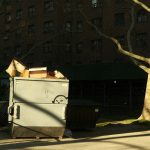
The dumpster had a personality before it even scraped the curb: dented on one corner, paint flaking like sunburned skin, a faded sticker that read ‘Pacific Haul’ half peeled away. It smelled faintly of old paint and the sour sweetness of last week’s bakery trash. Maria watched it arrive on Sunset Boulevard, sunlight bouncing off the Hollywood Hills behind it, and felt a small, giddy relief. After months of permits, contractors, and the stubborn pile of memories in her bungalow, the moment of clearing was finally here.
Setup: The Neighborhood and the Need
Maria’s bungalow sat on a quiet stretch between Echo Park and Silver Lake, a place where you hear skateboard wheels, a distant saxophone from a rooftop, and the rumble of delivery vans. Across town, Jamal, a roll-off driver with a laugh like a bass guitar, had started his morning in Gardena, dodging low-hanging ficus branches. He had a route that threaded through Long Beach, Torrance, Inglewood, and up into Pasadena on big days. The phone call that morning had pinged his truck: ‘Sunset Boulevard, homeowner cleanout, mattress, cabinets, some old drywall—no asbestos, hopefully.’
‘No asbestos, right?’ Maria had said when she booked the dumpster, remembering the talk from her contractor.’
‘We do a quick walk-through before we load. If it’s asbestos we call for containment and the licensed crew,’ Jamal replied, tugging his cap down against the morning glare. ‘But today it looks like mostly household junk and demo. We’ll sort what we can and get it to the right place.’
Rising Action: The Smell, the Sound, the Surprise
They rolled the dumpster into place with a grunt and a clatter. Neighbors opened windows; someone across the street said, ‘Finally!’ from a second-story balcony. The clink of metal hitting metal filled the alley. As the first pieces went in—a sagging couch, a broken dining table—Maria felt strangely exposed and free, as if she were shedding layers.
But LA has a way of complicating the simple. By mid-morning, a parking enforcement officer from the City of Los Angeles Department of Transportation appeared. ‘You need a permit for that on the street,’ she said briskly, clipboard in hand. Maria’s heart thudded. Her contractor had applied for one three weeks earlier, but the city had requested a small revision. ‘It’s okay, we’ll move it into the driveway,’ Jamal said, wiping sweat from his forehead. The driveway was tight; the dumpster’s lip would scrape the hedges. ‘Give me the hedge clippers,’ Maria joked, which diffused the tension, but the hedges survived by an inch and a prayer.
In Santa Monica, a condo renovation ran into a different problem: coastal access. Wind off the Pacific slapped down a gust of salt that sent drywall dust into the windows of a café two blocks away. Neighbors in West Hollywood filed noise complaints when a 40-yard roll-off blocked sight lines on a busy strip. Each site carried its own choreography of permits, HOA rules, and neighborly negotiations. Jamal and his crew were practiced at the dance—the shout, the paperwork, the polite smile that said, ‘We know how to make this less of a mess for you.’
Key Insights: What Every Angeleno Should Know
As the days unfolded, Maria learned things that no online ad could have taught her. She learned the sizes of dumpsters not by reading charts but by feeling them: a 10-yard felt like a compact armful, good for garage cleanouts in Burbank or small kitchen demo in Glendale; a 20-yard was a neighborhood-size beast, perfect for a mid-century remodel in Pasadena; a 30- or 40-yard was the stadium of dumpsters, used for full-house renovations across the valley or a multistory office clear-out in Downtown LA.
‘Weight matters more than volume,’ Jamal told her while they strapped a busted washing machine into a corner of the container. ‘We can fit a lot of light stuff, but ten cubic yards of concrete will cost you.’ In his voice was the kind of practical authority you get from hundreds of routes: there are per-ton charges at the transfer station and overage fees if the load exceeds the agreed weight. Flat-rate quotes are convenient, but smart homeowners ask for included weight limits and the price per extra ton.
Permits were another chapter. Curb placement often requires a street permit from the local city: Los Angeles, Long Beach, Pasadena, Santa Monica—each jurisdiction has rules and windows for placement. Some cities require traffic cones, reflectors, or liability insurance on file. For some beachside projects in Malibu, the Coastal Commission’s rules could complicate deliveries. In dense neighborhoods like West Hollywood and Koreatown, delivery times are best set for early mornings to avoid gridlock.
Then there are the forbidden things: paint cans with wet paint, fluorescent bulbs, tires, pesticides, and anything labeled hazardous. For those items, LA County operates Household Hazardous Waste Collection sites where residents can bring chemicals and electronics. Old mattresses, used furniture, and working appliances are often better donated to Habitat for Humanity ReStore, Goodwill, or picked up by local social services—saving landfill space and maybe getting a tax deduction.
‘We sort on the spot sometimes,’ Jamal explained as they separated metal for recycling and set aside a stack of old cabinets that a nearby builder might reuse. ‘Deconstruction beats demolition when you can do it. Keeps usable stuff out of the hole.’ The mantra of salvage echoed through a nearby job in Long Beach where ornate wooden balustrades found a new home in a craftsman house across town.
Insurance and licensing came up when an HOA board in Beverly Hills questioned liability. Always check that your hauler is licensed, insured, and provides a disposal receipt or manifest. This paperwork proves your waste went to a permitted facility and can be essential for contractors and homeowners alike, especially on larger jobs in Glendale or Compton where codes are strict and fines are real.
Resolution: The Last Load, the Deep Breath
The final day was quiet. Maria and Jamal loaded the last of her grandmother’s boxes, hands slower now, gentler. ‘I kept some,’ she said, placing a small ceramic dish in a cardboard box. Jamal smiled. ‘Good choices,’ he said. ‘You don’t have to toss everything to get a clean slate.’ He backed the truck toward the curb, the engine settling into a low purr that matched the late afternoon rhythm of Los Angeles—ice cream trucks on Franklin Avenue, a dog barking somewhere in Hancock Park, a plane tracing a silver line toward LAX.
When the dumpster left, it took a canyon of clutter with it and left behind a house that looked, for the first time in years, like a place waiting to be lived in again. Maria stood on the porch, the neighborhood a little more visible without that mound of history blocking the view. The hedges had survived, the city permit was in the file, and the trio of kids from next door waved as Jamal rolled away to his next stop in Culver City, where a retail fit-out was waiting.
At the recycling facility later that week, Jamal handed Maria a signed ticket showing weights and destinations: metals to the recycler in Vernon, concrete to a crushing yard outside the city, and general debris to a certified transfer station. ‘There it is,’ he said. ‘Proof our mess made a proper exit.’ It read like a small victory—paper and ink turning an emotional purge into an accountable, lawful act.
Takeaway: What to Remember and Do
If there is a single thing to carry away from Maria’s week of dumpsters, it is this: preparation makes the difference between a smooth project and a headache. Start with a clear assessment—what are you disposing of and what might be donated or recycled? Choose a dumpster size that matches your job, but ask about weight limits, included tonnage, and extra fees. Verify permits for curb placement early, and check local regulations in Santa Monica, Long Beach, Torrance, and LA for specifics about placement, signage, or restricted hours.
Ask your hauler for proof of disposal and for their license and insurance. Communicate access issues like narrow driveways, overhead wires in the San Fernando Valley, or steep lanes in Malibu. If you smell chemicals or suspect hazardous materials, stop and call a licensed abatement crew. And when possible, separate metals, wood, and reusable fixtures for donation or resale—deconstruction does more than preserve things; it preserves value.
On the last walk through her revitalized bungalow, Maria touched the warm plaster where a wall had once been, felt the air circulate differently, and thought of the town’s patchwork of attitudes—some places in LA treasure the old, some celebrate the new. Her home felt like both: a cleaned slate, and a museum of small treasures preserved in boxes. Jamal had driven away, the truck’s taillights blinking like a lighthouse through sunset traffic, but the lesson remained: the city will always make room to change, as long as you do the work with care, respect, and the proper paperwork.
The scene that lingered was simple: the empty curb, the hedges breathing easy, the distant Pacific glinting like a promise beyond Santa Monica, and the faint echo of a rolling dumpster finding its next stop among the palm-lined avenues of Greater Los Angeles.