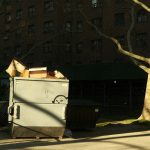
The first time Maria saw the orange dumpster, it seemed to arrive with the kind of authority only a big truck and a loud diesel engine can command. It sat on the curb of her Silver Lake bungalow like a giant metal promise — the promise of space cleared, of old renovations exhumed and finally gone. The sun was rising behind the hills, painting the Griffith Observatory silver, and the lid clanged twice as a crew of three began tossing down plywood, an old sofa that had seen better decades, and the ghost of a tile backsplash from a kitchen that used to be proud.
Setting the Scene: Morning in the City
Los Angeles smells like overtime: the faint salt of the ocean two neighborhoods away, the espresso of the corner cafe, and the metallic tang of a dumpster being filled. Maria cupped her hands against the chill of dawn and watched. Her contractor, Miguel, wiped sweat from his brow though the day was still cool. “Okay,” he said, tossing a strip of roofing into the bin, “this is where the real work begins. But we need a permit for curb placement in nine out of ten places here.”
He called Alex, the dispatcher from the roll-off company, who sounded like he had half the map of Greater Los Angeles memorized. “Santa Monica will make you apply online, Pasadena might want a photo of the placement, and if you put it on a city street in DTLA you absolutely need a permit from LADOT,” Alex explained. He listed neighborhoods like Echo Park and Koreatown like someone naming old friends: a cautionary roll call of municipal rules.
Characters and Stakes: Who’s Involved
There were three types of people in this story: the homeowner who wanted her house back, the contractor who needed the debris gone, and the city that expected rules to be followed. Maria felt all three. Renting a dumpster in Los Angeles wasn’t just about hauling junk away; it was about timing, about permits, about neighbors with opinions and HOAs with bylaws.
Across town, in a narrow alley behind a Craftsman in Culver City, a different crew wrestled a refrigerator into a small front-load bin. In Long Beach, a landscape company loaded green waste into a compact roll-off, the smell of cut grass bright against the ocean hum. In Burbank, a film set cleanup called for speed and discretion. Each scene was different, but they shared the same tension: if you misjudge weight, size, or paperwork, the truck leaves without the dumpster and the clock keeps ticking.
Rising Action: Tight Spaces and Tight Deadlines
Two days into the project, worry arrived like a gust of Santa Ana wind. Miguel called from the alley. “The truck can’t fit. The pathway is twelve feet wide at best, and there are power lines. We might need a smaller bin or a special permit for street placement.” He sounded exhausted but practical.
Alex came out with a clipboard and a practiced calm. He squinted at the driveway between two avocado trees, then at the house number spelled out in tile. “We can do a 10-yard roll-off here,” he said, tapping the clipboard, “or a 15 if you pull the car out. But if you want it on the curb in West Hollywood, that will require a temporary parking permit. And for Santa Monica beachfront spots, watch the protected street sweeping calendar — you don’t want a ticket on top of the rental.”
The dumpster became a fulcrum around which a host of small dramas spun: a neighbor complaining about aesthetics in Silver Lake, a delivery truck blocking the van on Melrose, a misplaced mattress that attracted a raccoon’s curiosity. Each incident taught Maria a lesson about urban logistics: in Los Angeles, everything intersects — the ocean breeze carries noise, the hills carry runoff, and the municipal codes carry consequences.
Key Insights Woven into the Story
While the crew worked, Alex explained how dumpster removal really worked across Greater Los Angeles. “Most folks choose roll-off dumpsters for renovations and large cleanouts — sizes range from about 10 to 40 cubic yards. A 10-yard is great for garage cleanouts or small remodels in Echo Park. If you’re gutting a kitchen in Sherman Oaks, a 15 or 20 might be the sweet spot. For major demos in Torrance or Carson, some crews use a 30 to 40-yard bin.” He handed Maria a small brochure with a scale drawing of each size.
He also talked about weight. “Those flat fees cover a base weight — usually a ton or two. If you overload the bin, there’s an extra per-ton charge. That mattress? That can add weight and trigger extra fees if you’re not careful.” He added that certain items are always prohibited: hazardous materials like paint solvents, tires, propane tanks, or anything with a freon line — refrigerators need special handling. “For hazardous waste, LA County has household hazardous waste centers. For large volumes of recyclables, some transfer stations in Long Beach and Pasadena separate materials and reduce landfill impact.”
Maria listened, picturing the choices she needed to make. She liked the idea of donating usable appliances and recycling metal. Alex suggested local options: thrift stores in Hollywood pick up furniture, and many cities in the region have neighborhood drop-off events for e-waste and chemicals.
Practical Tips Hidden in the Tension
Because Maria had chosen to place the dumpster on the curb, Alex insisted on a permit search. “I’ll check with the city,” he said, tapping his tablet. “Some cities let us handle the permit for a fee. Other cities — Santa Monica is strict — require you or your contractor to apply. If the dumpster blocks a parking lane, it’s a permit. If it’s entirely on your driveway, usually it’s fine, but watch the slope and access so the truck can back up safely.”
He also recommended booking early. “Around spring and summer, demand spikes. Contractors in Pasadena and Glendale book out weeks ahead. If you have a weekend project in Malibu, call early — and ask about drop-off windows; some companies don’t want to be stuck in street traffic at peak hours.”
Price transparency mattered too. Alex walked Maria through an example: a 15-yard dumpster for a week might cost anywhere from roughly $350 to $700 depending on location, debris type, and included tonnage. Add-ons like extended rental time, same-day swaps, or extra weight could add to the bill. “We try to give a firm quote,” he said, “but it’s always an estimate until we see what’s actually in the bin.”
Conflict: A Permit, a Neighbor, and an Unexpected Storm
That afternoon a surprise shower — thin, decided, characteristic of April along the coast — started. It washed dust into the gutters and made the plywood slick. A neighbor leaned over a fence in a small house on the other side of the yard and said, “This is going to attract rats.” The comment stung; Maria felt both embarrassed and defensive. She had planned to remove debris quickly, but now she worried.
Within an hour, the LA Department of Transportation left a notice on the dumpster — the city needed a permit because it partially blocked the sidewalk. Miguel cursed softly. Alex took responsibility: “We can handle this. I’ll call the office and file the permit; it will be approved today if we pay the processing fee.” He flashed a quick smile. “But it slows you down.”
Maria felt that familiar Los Angeles friction: rules and weather and neighbors intersecting with a homeowner’s timeline. She thought of other LA cleanup stories she’d heard, like the contractor in Burbank who got fined for an improperly placed bin, or the homeowner in Malibu whose dumpster remained for weeks after an estate sale. The cost wasn’t just money; it was time, reputation, the small peace of her block.
Resolution: The Truck Comes, the City Lets Go
Two days later, the permit came through. Alex’s team swapped the partially filled dumpster for an empty one and hauled the debris to a transfer station near the 110, where the crew separated metals and salvaged fixtures. Maria walked through the house, the floorboards finally visible, the rooms echoing with possibility. When the truck backed out, it left a line of tire prints on the curb glinting like pen strokes in the fading light.
“We did it right,” Miguel said, handing Maria a printout of the invoice and the permit confirmation. “You didn’t pay any surprise fines, and we donated the working fridge to a shelter in Inglewood.” She smiled at the thought of that old appliance finding new use instead of rotting in a landfill.
Takeaway: What to Remember and Do
There are concrete things to carry away from Maria’s week of clatter and paperwork. In Greater Los Angeles, dumpster removal is part logistics, part diplomacy, and part environmental stewardship. Here are the essentials woven through her story:
- Choose the right size: 10-15 yards for small renovations and cleanouts; 20-40 for bigger demolitions. Think about access — narrow alleys may require smaller units.
- Check permits early: curb placement often needs city permits. Some areas like Santa Monica, West Hollywood, and parts of DTLA have stricter rules.
- Know the prohibitions: hazardous materials, certain appliances, and tires usually need special handling. Plan to separate recyclables and donations.
- Expect weight limits: quotes often include base tonnage; overweight fees apply.
- Book ahead during busy seasons and ask about drop-off windows to avoid traffic fines and delays.
- Choose responsible providers: ask where debris will be taken and whether items will be salvaged, recycled, or sent to transfer stations and sanitary landfills.
Maria’s home was quieter now. The air smelled like cedar and detergent where the last plank of damaged flooring had been carried out. As the sun set behind the palms lining Sunset Boulevard, the truck’s taillights blinked and the neighborhood settled. She poured wine and stepped onto her porch; a gull cried distant and bright, like punctuation to a long paragraph. The dumpster was gone. The street looked the same and wholly different. Space had returned, and with it a small, satisfying clean horizon.
Later, she would write Alex a note: thank you for the careful work, include the permit number, and a suggestion about a neighborly heads-up in small blocks. It felt like the right ending — quiet, practical, and a little more connected to the many rules and rhythms that keep Los Angeles moving. Outside, in the warm afterglow of the city, a single palm tree swayed like a sentinel, steady and oddly consoling, overlooking a house that finally felt like it could breathe again.