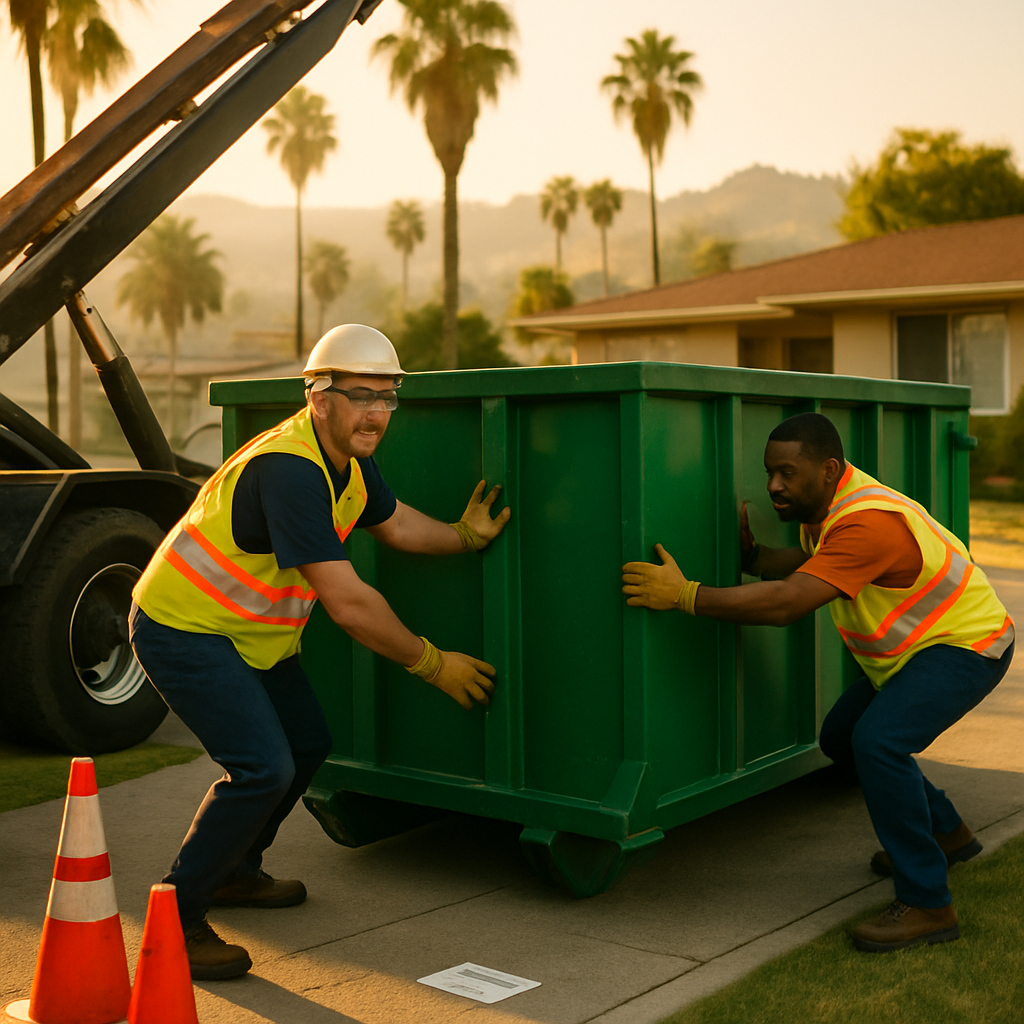
It began with a single thud: a practiced, pneumatic sigh as the roll-off truck backed up to Marisol’s bungalow in Echo Park, an army of orange cones clicking under the afternoon sun. The neighbors paused, cups of coffee hovering mid-air on their porches, drawn by the arrival of a large metal box that promised both chaos and catharsis. ‘We can finally clear the garage,’ Marisol said, eyes bright with a kind of brave exhaustion. It felt like the start of a small revolution.
Hook: The Dumpster Moment
How many times had a heap of old drywall, a mountain of boxes, or a rusting patio set been allowed to sit and fester because the path to removal seemed too complicated? In Los Angeles, from the palm-lined streets of West Hollywood to the quiet hills of Pasadena, the roll-off dumpster is more than a container—it’s a turning point. That clatter and hiss of steel against asphalt signals the possibility of reclaiming space, of turning years of accumulation into something manageable. Yet behind that moment are permits, schedules, weight limits, and the small human dramas that make each job unique.
Setup: Characters, Streets, and the Decision
Marisol, an elementary school teacher, had inherited a garage stuffed with decades of items from a late aunt. Down the street, Javier, a contractor in El Segundo, balanced tight timelines for a kitchen demo. In Santa Monica, a landlord faced a post-tenant cleanup that had to be done before the next month’s lease. Each had called the same local dumpster company after searching online, scrolling past ads that promised ‘same-day delivery’ and ‘green disposal.’ But their reasons were different: memory and sentiment, contract obligations, and quick turnover.
The truckmen—Miguel and Rosa—knew the rhythm of the city. They navigated through Venice alleys and Hollywood boulevards with practiced ease, windows rolled down to the smell of ocean breeze or the distant tang of freeway exhaust. ‘Measure once, place twice,’ Rosa joked as she stepped out to scope a driveway in Burbank that looked tighter than an old soda can. Their routine was methodical: size up the site, check for permits, decide whether the dumpster would sit on the street or the driveway, and call in the city if needed.
Rising Action: Complications on the Curb
Problems arrived in small ways. A homeowner in Beverly Hills didn’t realize the city required a temporary curb permit for any container placed on a public street. In Monterey Park, a narrow lane meant the roll-off truck couldn’t back in, and the crew had to strategize the placement by hand. At a Pacific Palisades renovation, an old tree root lifted a bit of sidewalk, making the placement a delicate task.
There were odors too—a mix of sawdust from a demolition job in Torrance, a faint chemical tang from old cans of paint someone had mistakenly tossed into a bin in Inglewood. ‘No paint, no batteries, and no tires,’ Miguel reminded every customer, a litany learned through countless redirections at transfer stations. If hazardous items ended up in the dumpster, the crew would have to separate them and take them to Household Hazardous Waste drop-off events run by various Los Angeles County agencies.
Traffic and timing added pressure. In Long Beach, a delivery window meant dodging rush-hour freight, while in Culver City, a film shoot forced the team to reschedule. Each disruption nudged the timeline and the budget, turning simple decisions into logistical puzzles.
Key Insights: Practical Knowledge between the Lines
By the time Marisol’s dumpster sat humming in her driveway, the crew had given her the essentials. Dumpster sizes in L.A. typically run from about 10 to 30 cubic yards—10-yard bins for small cleanouts, 20-yarders for bulky household gut jobs, and 30-yard containers for heavy renovations. Weight matters as much as volume. A 20-yard dumpster can reach weight limits (often around 2-3 tons) faster if it’s filled with concrete or dirt, and overage fees can climb quickly.
Permits are neighborhood-specific. The City of Los Angeles, Santa Monica, Beverly Hills, and other municipalities each have rules for placing dumpsters on public streets. In many cases a curb or parking permit is required, and fees vary. Driveway placement usually avoids permits but requires measuring the drop-off area and considering property damage concerns—wooden boards or protective mats under the dumpster can prevent gouged concrete.
Disposal and recycling were woven into the narrative. Miguel explained the chain: ‘We separate wood, metal, and cardboard when we can, and we take appliances to certified recyclers.’ Los Angeles County has invested in transfer stations and materials recovery facilities that divert recyclables from landfill, and many local companies advertise higher diversion rates. But the responsibility often falls on the customer to segregate hazardous items—electronics, paint, solvents, fluorescent bulbs—so they can be handled correctly at HHW events.
Timing and rental periods varied. Standard rentals run for about seven days, though same-day delivery and expedited pickups are commonly available for an extra fee. Contractors like Javier prefer weekly rotation schedules to keep jobs moving. For homeowners undertaking a single weekend declutter, a shorter rental can save money and reduce temptation to overfill.
Interlude: Voices on the Street
‘We left the old sofa in the alley for two years,’ laughed the neighbor across from Marisol, nodding toward a freshly empty curb. ‘When I saw that dumpster, I knew I could finally get rid of it.’ Rosa crouched to pick up a stray screw, the sun catching the rim of her safety glasses. ‘Small things add up,’ she said. ‘We take pride in making a mess disappear, but we also want to leave the place better than we found it.’ The empathy in her tone was real—this job is frequently intimate, a way of closing chapters.
Education through Action: Best Practices Emerged
Through the bustle, clear rules became visible. Schedule early for peak seasons (spring cleaning, post-holiday, and post-storm months experience higher demand in the South Bay and San Gabriel Valley). Photograph your driveway before and after drop-off to document any damage. Disclose contents honestly to avoid hazardous surprises at the transfer station. If you’re in a HOA-heavy area like Brentwood or Pacific Palisades, check association rules about exterior containers. And always compare quotes that include delivery, pickup, tonnage, and permit fees—what looks cheap can balloon into a costly surprise.
There were environmental choices too. Donating usable items to local organizations in Hollywood, Glendale, or Pasadena before tossing them can extend lifespans and reduce disposal costs. Concrete, bricks, and asphalt can often be recycled or crushed into fill material, reducing landfill burden. Many providers now offer ‘green’ options—sorting on-site or partnering with specialized recyclers to increase landfill diversion.
Resolution: The Clean Sweep
At dusk in Echo Park, the dumpster sat three-quarters full and humming with the residual scent of sawdust and old paper. Marisol stood barefoot on her porch steps, fingers warm with a mug of tea. Around her, the neighborhood exhaled; a few kids chalked new drawings where the truck had blocked the sidewalk earlier. ‘Feels like the place can breathe now,’ she said. Miguel wiped his palms on his jeans, satisfaction plain on his face. ‘That’s the part I like most,’ he replied. ‘Seeing a yard empty where stuff once lived.’
Within a week, the bin was picked up and hauled to a transfer station in the county. Metals were separated, recyclables diverted, and the remaining mixed debris headed to authorized facilities. A few sentimental items were discovered in the pile—handwritten recipes, a faded jacket—carefully set aside, the sort of small discoveries that make disposal feel humane rather than purely transactional.
Takeaway: What to Remember and Do
If you live anywhere from Malibu to Compton, from Long Beach to Pasadena, here are the essentials to keep in mind when arranging dumpster removal: measure your space and choose an appropriate size; check local municipal or HOA permit requirements; declare prohibited and hazardous items in advance; ask about weight limits and overage fees; prioritize recycling and donation; and schedule during off-peak times when possible. Use protective pads to avoid driveway damage and photograph the area before and after delivery.
Beyond logistics, there’s a human element: communication with your crew, respect for neighbors—placing cones and warning signs is more than courtesy; it’s safety—and the small dignity of handling someone’s belongings with care. Whether clearing out a garage in Studio City or a foreclosure in Inglewood, dumpster removal is often the last step in letting go and the first step in making room for what comes next.
The truck that came to Marisol’s house drove off into the amber light, the container shadow shrinking on the pavement, leaving behind a cleared driveway and the soft, satisfied hum of a neighborhood returned to itself. In Los Angeles, where space is at a premium and life moves fast, those moments of clearing are small but meaningful—a private reclamation under an endless, sunlit sky.